








What's Happening?
Russian President Vladimir Putin is currently in Beijing for a two-day summit with Chinese President Xi Jinping. This meeting marks the second time the two leaders have met in the past year. The summit is significant as it tests the 'strategic triangle'
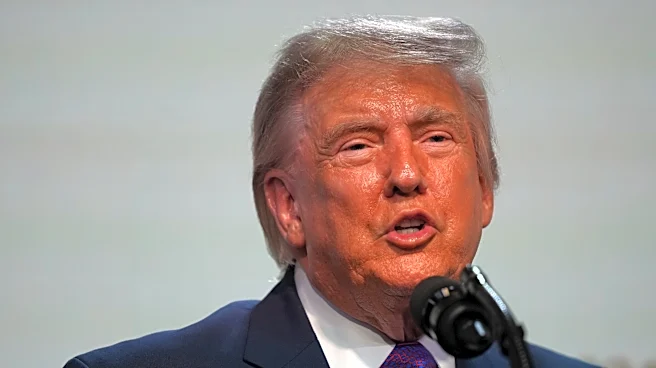
relationship between Russia, China, and the United States. Putin is seeking reassurance from Xi that any improvement in China's relations with the U.S. will not disrupt the close ties between Russia and China. During the summit, energy discussions are a priority for Putin, who is aiming to secure a 'serious' oil and gas deal with China. Meanwhile, U.S. President Donald Trump has delayed a planned attack on Iran at the request of Middle Eastern nations, who believe they are close to reaching a diplomatic resolution.
Why It's Important?
The summit between Putin and Xi is crucial as it could redefine the geopolitical dynamics between the three major powers: Russia, China, and the U.S. The 'strategic triangle' is a delicate balance that influences global political and economic stability. Any shift in this relationship could have significant implications for international trade, security, and diplomatic relations. For the U.S., maintaining a stable relationship with China while managing tensions with Russia is vital for its foreign policy objectives. The potential energy deal between Russia and China could also impact global energy markets, affecting prices and supply chains. Additionally, President Trump's decision to delay military action against Iran highlights the complex interplay of diplomacy and military strategy in the region.
What's Next?
The outcomes of the Beijing summit could lead to further diplomatic engagements or shifts in alliances. If Russia and China strengthen their ties, it may prompt the U.S. to reassess its strategies in Asia and Europe. The potential energy deal between Russia and China could alter global energy dynamics, influencing other countries' energy policies. Meanwhile, the delay in U.S. military action against Iran suggests ongoing diplomatic efforts, which could lead to a resolution or further tensions depending on the negotiations' success. The G7's concerns about a 'stagflationary shock' due to the Iran conflict also indicate potential economic challenges that could arise from these geopolitical developments.