








What's Happening?
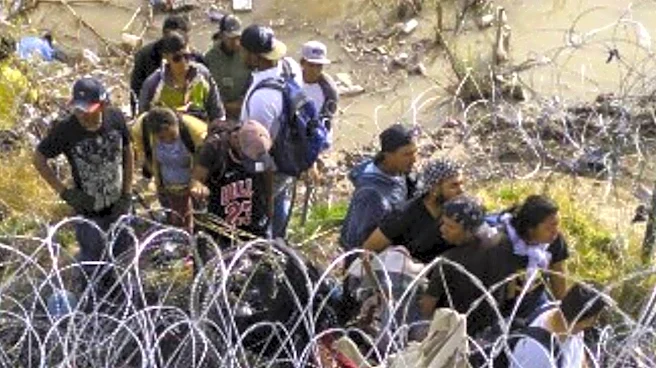
Portugal's Public Security Police (PSP) has reported a rise in irregular migrants arriving in Lisbon and Porto via bus and train from other European cities. This trend indicates an increase in secondary migration movements within the Schengen Area, where
migrants initially enter other European countries before traveling to Portugal. Superintendent-chief Joao Ribeiro, deputy national director and head of the National Foreigners and Borders Unit (UNEF), stated that risk factors have been identified, particularly in the metropolitan areas of Lisbon and Porto, concerning road and rail flows. He noted that while the phenomenon is not entirely new, data analysis shows a growing number of secondary movements towards Portugal. The PSP plans to intensify inspections at transport hubs and locations with a higher presence of relevant communities in the coming months, utilizing mobile border controls at bus terminals and train stations.
Why It's Important?
This development in Portugal has implications for broader European and potentially U.S. immigration policies. An increase in secondary migration within the Schengen Area highlights the challenges of managing internal borders and tracking migrant movements once they have entered the EU. For the U.S., which often collaborates with European nations on immigration and security matters, this situation underscores the complexities of international migration patterns and the potential for ripple effects across continents. The PSP's intensified checks reflect a growing concern over border security and the integrity of national immigration systems, a concern shared by many countries, including the U.S. The situation could also influence discussions on international aid and cooperation in addressing the root causes of migration.
What's Next?
The PSP will intensify its mobile border controls and inspections at transport hubs and areas with significant migrant communities in Lisbon and Porto. This proactive approach aims to manage the influx of irregular migrants and maintain the integrity of Portugal's borders. The officer explained that many individuals arriving this way do not intend to remain in Portugal but use it as a transit point to northern Europe or as a platform to access other EU countries via air borders. This suggests that other European nations may also experience increased arrivals as migrants continue their journeys. The PSP's strategy is focused on efficient and effective border control, aiming to counter the perception that entry into Portugal is easy. This could lead to further policy adjustments and increased collaboration among Schengen member states to address these evolving migration patterns.
Beyond the Headlines
The rise in irregular migration to Portugal, particularly as a transit point, reveals deeper issues within the Schengen Area's open border policy and the broader European migration crisis. It highlights the challenges faced by individual member states in managing migration flows when initial entry points are elsewhere. This situation could lead to increased political pressure within Portugal and other EU countries to re-evaluate internal border controls or to strengthen external border security. Ethically, it raises questions about the humanitarian treatment of migrants in transit and the responsibilities of host countries. The PSP's rejection of claims of a 'hunt' for undocumented migrants, emphasizing an intelligence-led approach, points to the delicate balance between security concerns and human rights. This ongoing dynamic will likely shape future European and international discussions on migration policy and human mobility.