

What's Happening?
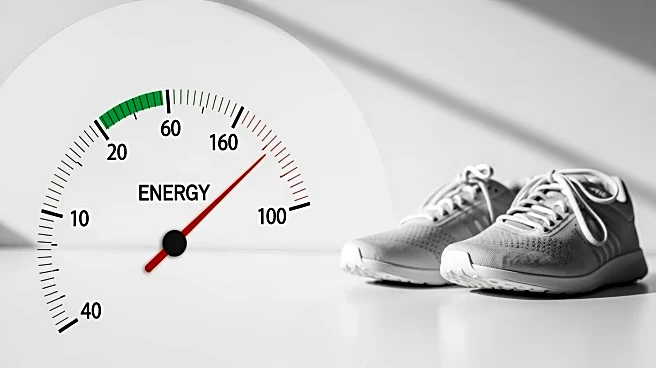
A recent study published in the Proceedings of the National Academy of Sciences has found that physical activity increases the total daily energy expenditure without the body compensating by reducing energy use in other areas. Conducted by researchers
from Virginia Tech, the University of Aberdeen, and Shenzhen University, the study challenges the notion that the body offsets increased physical activity by cutting back energy use elsewhere. The research involved 75 participants aged 19 to 63, with varying levels of physical activity, from sedentary lifestyles to ultra-endurance running. Participants consumed special isotopes of oxygen and hydrogen, allowing researchers to measure energy expenditure through carbon dioxide production. The findings indicate that increased physical activity leads to higher calorie burn, supporting the additive energy model, which suggests that energy use can expand with increased activity.
Why It's Important?
This study has significant implications for understanding how physical activity affects energy balance and weight management. By demonstrating that the body does not compensate for increased physical activity by reducing energy expenditure elsewhere, the research supports the idea that exercise can effectively contribute to weight loss and maintenance. This challenges previous assumptions and provides a clearer understanding of how physical activity influences overall energy budgets. The findings could influence public health recommendations and strategies for combating obesity, encouraging more people to engage in regular physical activity as a means to improve health outcomes and manage weight effectively.
What's Next?
Further research is needed to explore the conditions under which energy compensation might occur, as well as to understand the long-term effects of increased physical activity on energy balance. Researchers suggest that future studies should investigate different populations and activity levels to determine if the findings are universally applicable. Additionally, understanding the role of nutrition and adequate fueling in energy balance could provide more insights into optimizing exercise and dietary recommendations for various groups.