





What's Happening?
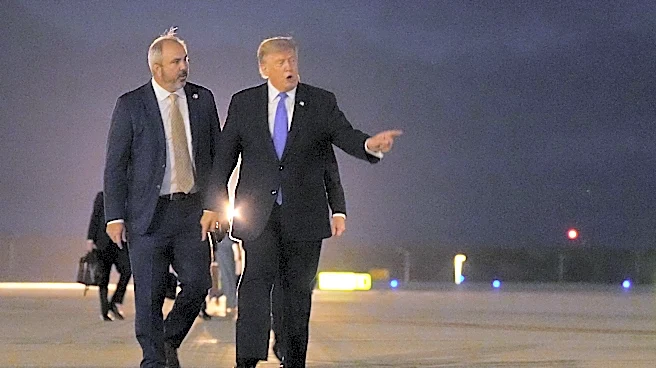
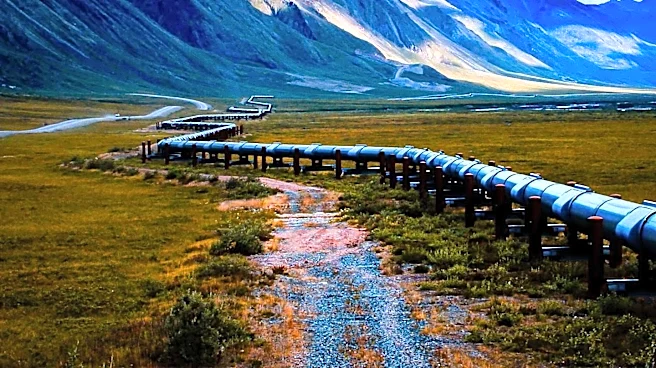
President Trump has announced support for a revived oil pipeline project between Iraq and Syria, aimed at bypassing the strategic Strait of Hormuz. This initiative is part of a broader effort to reshape Middle East energy dynamics and reduce Iran's influence
over the Strait. The pipeline, originally completed in 1952, will be replaced to facilitate oil exports from Iraq to Syria's Mediterranean coast, providing a strategic alternative to Gulf routes. The project is expected to enhance regional energy security and attract foreign investment, with US companies poised to participate in rebuilding the pipeline.
Why It's Important?
The revival of the Iraq-Syria pipeline represents a significant shift in Middle East energy strategy, with potential implications for regional geopolitics. By providing an alternative route for oil exports, the project aims to reduce reliance on the Strait of Hormuz, a critical chokepoint for global oil shipments. This move could weaken Iran's leverage over the Strait and enhance energy security for Iraq and Syria. Additionally, the project signals a potential thaw in US-Syria relations, as President Trump removes Syria from the list of State Sponsors of Terrorism, paving the way for increased economic cooperation.
What's Next?
As the pipeline project progresses, stakeholders will closely monitor its impact on regional energy markets and geopolitical dynamics. The involvement of US companies in rebuilding the pipeline could strengthen economic ties between the US, Iraq, and Syria. However, the project may face challenges, including geopolitical tensions and the need for significant infrastructure investment. The success of the pipeline could influence future energy projects in the region and shape the strategic landscape of the Middle East.