






What's Happening?
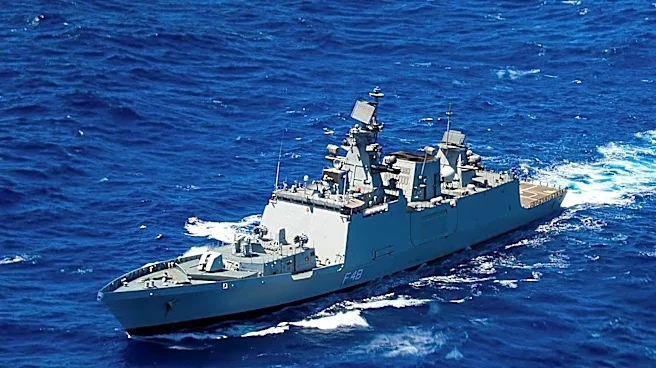
North Korean leader Kim Jong Un supervised the testing of a nuclear-capable cruise missile and other weapons aboard the newly repaired 5,000-ton destroyer, the Kang Kon. This event marks a significant step in North Korea's efforts to build a nuclear-armed
navy. The tests included the firing of strategic cruise missiles, the main gun, and automatic cannons, as well as trials of electronic warfare systems and assessments of target-detection and information-processing capabilities. Kim ordered the completion of the destroyer's trials and its deployment into active duty within two months. This follows the commissioning of North Korea's first 5,000-ton destroyer, the Choe Hyon, in late June, which was celebrated with a lavish ceremony.
Why It's Important?
The development of a nuclear-armed navy by North Korea represents a significant shift in the country's military strategy, which has traditionally focused on ballistic missile development. By expanding its naval capabilities, North Korea aims to enhance its operational reach and preemptive strike capabilities. This move could alter the balance of power in the region, prompting concerns among neighboring countries and the international community. The involvement of Russian assistance in building these vessels, as suggested by South Korean officials, indicates deepening military ties between North Korea and Russia, which could have broader geopolitical implications.
What's Next?
Kim Jong Un has set ambitious goals for North Korea's naval expansion, including the construction of two new 5,000-ton warships annually over the next five years and the development of a larger 10,000-ton destroyer. The successful deployment of the Kang Kon into active duty could further embolden North Korea's naval ambitions. The international community, particularly the United States and its allies, may respond with increased diplomatic pressure or military readiness to counterbalance North Korea's growing naval capabilities.
Beyond the Headlines
The expansion of North Korea's naval capabilities raises ethical and legal questions regarding the proliferation of nuclear weapons and the potential for increased military tensions in the region. The involvement of foreign assistance in North Korea's military developments could lead to further scrutiny and sanctions. Additionally, the focus on naval power may signal a long-term strategic shift in North Korea's military doctrine, potentially influencing regional security dynamics for years to come.