




What's Happening?
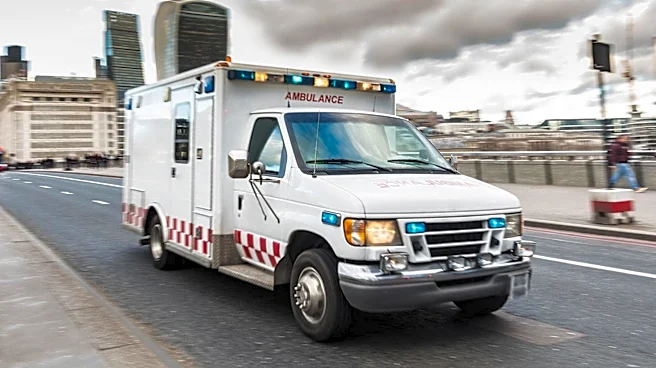
Richmond Heights city officials are considering implementing a Crosswalk Health 911 nurse program to divert low-acuity emergency calls from ambulances to registered nurses. Fire Chief Marc Neumann presented the program to the Richmond Heights City Council,
explaining that the fire department frequently receives 911 calls for non-emergencies, such as assisting elderly residents down stairs or providing rides to doctor appointments. These calls, which can account for up to 30% of simultaneous 911 calls, tie up ambulance units that are needed for genuine emergencies. Under the proposed plan, low-acuity calls routed through Chagrin Valley Dispatch would be transferred to Crosswalk Health, where callers would speak with a registered nurse to determine appropriate care, which could include primary care, urgent care, or behavioral health services, rather than an immediate ambulance dispatch. Richmond Heights already has a community paramedic, Nicole Sovizral, who would provide follow-up care for callers diverted to the nurse line. The city aims to begin the partnership in early 2027, with neighboring Euclid also planning to adopt the program.
Why It's Important?
This initiative is significant for U.S. public policy and healthcare resource management, particularly in urban and suburban areas. By diverting non-emergency calls, Richmond Heights aims to optimize the deployment of emergency medical services, ensuring that ambulances are available for life-threatening situations. This approach can reduce strain on fire departments, lower healthcare costs associated with unnecessary emergency room visits and ambulance transports, and improve overall community health outcomes by connecting residents with appropriate care. The program also leverages existing community paramedic services, demonstrating an integrated approach to healthcare delivery. This model could serve as a blueprint for other U.S. cities facing similar challenges with 911 call volumes and resource allocation.
What's Next?
The Richmond Heights City Council will further research the Crosswalk Health program before a vote at an upcoming meeting. If approved, the partnership is slated to begin in early 2027. The city anticipates that the program, combined with its existing community paramedic services, will reduce avoidable ambulance transports and emergency department visits. Laura Frost, a University Hospitals representative, indicated that UH would remain a partner in the arrangement, providing medical oversight. The success of this program could influence other communities, including Euclid, which plans to adopt it, to implement similar nurse-based 911 diversion strategies. The long-term goal is to potentially open up future reimbursement opportunities to sustain the community paramedic program beyond its current grant funding.
Beyond the Headlines
The adoption of a 911 nurse program in Richmond Heights reflects a broader national trend towards re-evaluating and optimizing emergency response systems. This initiative highlights the evolving understanding of what constitutes an 'emergency' and the need for more nuanced, patient-centered approaches to healthcare access. It raises ethical considerations about triage and the potential for misjudgment in diverting calls, though the system is designed to escalate true emergencies. Culturally, it challenges the ingrained habit of using 911 as a default for any health concern, encouraging a more informed and responsible use of emergency services. The program also underscores the growing recognition of social determinants of health, as it aims to connect vulnerable populations, particularly seniors, with appropriate community resources and transportation support, addressing systemic barriers to care.