


What's Happening?
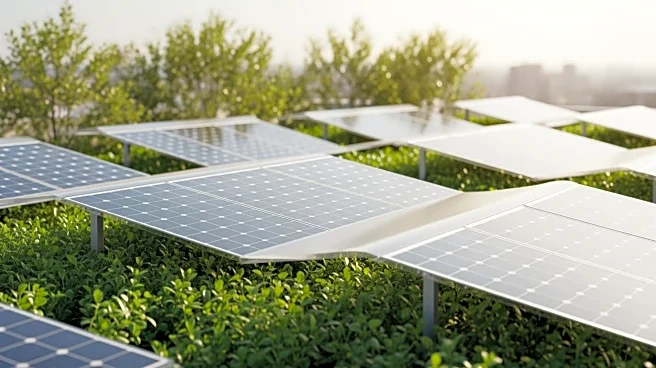
The City Agriculture report, published on January 20, 2026, discusses the integration of solar energy production with agriculture, known as agrivoltaics, and its potential to enhance urban farming. The report highlights the American Solar Grazing Association's
efforts to promote solar grazing, where livestock graze under solar panels, optimizing land use. Additionally, the report covers international initiatives, such as Italy's funding of 2 GW of agrivoltaics and the UK's 'forest city' plans. It also explores innovative solutions like floating islands in Copenhagen's harbor and legal rights for Amazonian bees. The report emphasizes the role of urban farms in making cities more livable and addressing food security challenges. It also notes technological advancements, such as drones planting mangroves and sea grass beds, which significantly increase CO2 uptake compared to traditional methods.
Why It's Important?
The integration of agrivoltaics and urban farming represents a significant shift towards sustainable agriculture and energy production. By combining solar energy with agriculture, these initiatives can maximize land use efficiency, reduce carbon footprints, and enhance food security. Urban farms can play a crucial role in feeding growing city populations while reducing the environmental impact of food production. The report's emphasis on international collaborations and technological innovations highlights the global nature of these challenges and the need for shared solutions. The potential for drones to rapidly plant mangroves and sea grass beds could revolutionize reforestation and carbon sequestration efforts, offering a scalable solution to climate change mitigation.
What's Next?
The continued development and implementation of agrivoltaic systems and urban farming initiatives are expected to expand. Policymakers and industry leaders may focus on creating supportive regulatory frameworks and financial incentives to encourage investment in these areas. The success of pilot projects in countries like Italy and the UK could serve as models for other nations. Additionally, advancements in drone technology and other innovative solutions will likely be further explored and refined. Stakeholders, including environmental organizations, agricultural communities, and urban planners, will need to collaborate to address potential challenges and optimize the benefits of these systems.
Beyond the Headlines
The adoption of agrivoltaics and urban farming could have profound cultural and social implications. These practices may lead to a reimagining of urban spaces, where green areas and food production become integral parts of city life. This shift could foster a greater connection between urban residents and their food sources, promoting sustainability and environmental stewardship. Furthermore, the legal recognition of species like Amazonian bees underscores the growing awareness of biodiversity's importance in maintaining ecological balance. As these initiatives gain traction, they may inspire further innovations in sustainable living and environmental conservation.