






What's Happening?
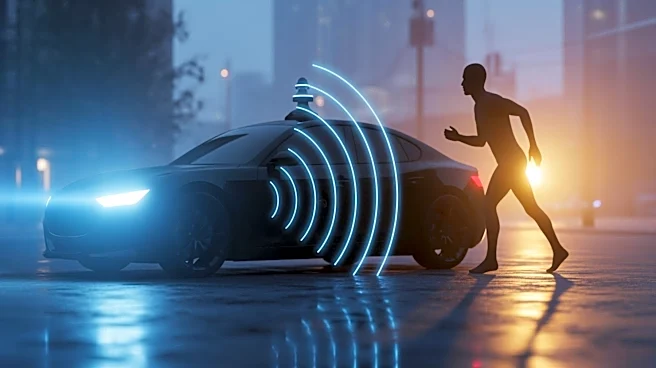
A recent study conducted by the University of Glasgow and KAIST has highlighted significant safety concerns regarding self-driving cars and their interaction with runners. The research utilized augmented reality to simulate scenarios where runners and pedestrians
encountered autonomous vehicles. Findings indicated that runners, unlike walkers, are more prone to taking risks, such as crossing roads without slowing down, which current automated vehicle systems may not adequately address. The study involved 24 participants who interacted with virtual cars through augmented reality headsets. The vehicles were equipped with external displays to communicate their intentions, but runners still struggled to interpret complex signals, leading to collisions in simulated environments. The research underscores the need for improved safety systems in self-driving cars to ensure they can safely share roads with runners.
Why It's Important?
The study's findings are crucial as they highlight a potential gap in the safety protocols of self-driving cars, which are increasingly being integrated into urban environments. As autonomous vehicles become more prevalent, ensuring their ability to safely interact with all types of road users, including runners, is essential to prevent accidents. This research could influence future design and regulatory standards for self-driving technology, emphasizing the need for clearer communication systems between vehicles and pedestrians. The implications are significant for manufacturers and policymakers who must address these safety challenges to gain public trust and ensure the successful deployment of autonomous vehicles.
What's Next?
The study suggests that further research and development are needed to enhance the interaction between self-driving cars and runners. This could involve designing more intuitive external communication systems for vehicles and revising safety standards to account for the unique behaviors of different road users. As the industry moves towards the widespread adoption of autonomous vehicles, manufacturers like Waymo, which plans to launch a driverless taxi service, will need to demonstrate the effectiveness and safety of their systems. Regulatory bodies may also consider updating guidelines to incorporate findings from such studies, ensuring comprehensive safety measures are in place.