




What's Happening?
Marine Le Pen, leader of France's National Rally, has announced her intention to propose a ban on the Islamic headscarf in all public spaces if she wins the 2027 presidential election. This proposal, a long-standing part of her party's platform since
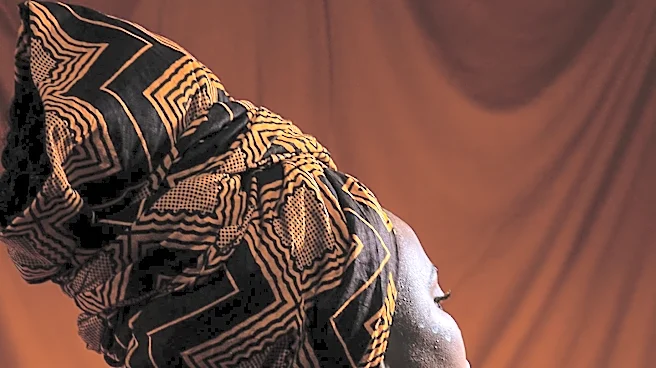
2012, aims to combat Islamist ideologies. Le Pen plans to achieve this through a national referendum. The proposed ban would extend to sidewalks, shops, and public transportation, with violations incurring fines similar to those for not wearing a seatbelt. While Le Pen acknowledges the complexity of the issue, she has reiterated her commitment to this measure, which she claims is supported by 60 to 70 percent of French voters who view the headscarf as a religious symbol rather than an item of clothing freedom. This initiative specifically targets the Islamic headscarf, excluding other religious symbols like Jewish kippahs or Christian crosses.
Why It's Important?
Le Pen's proposal carries significant implications for religious freedom and secularism in France. Critics, including constitutional lawyers like Benjamin Morel, argue that such a referendum would be unconstitutional, as French law restricts referendums to issues concerning state organization, economic, social, and environmental policy. Implementing the ban would necessitate amending the French constitution, a move likely to face strong opposition from the Constitutional Council and European courts. Furthermore, law enforcement unions have expressed concerns about the practical enforceability of such a ban, suggesting it would lead to daily persecution of millions of Muslim women. The proposal also highlights internal divisions within the National Rally, with figures like Jordan Bardella, Le Pen's protégé, previously expressing reservations about a global veil ban, though he has since officially backed her initiative while prioritizing an immigration moratorium.
What's Next?
Should Marine Le Pen win the 2027 presidential election, the immediate next step would be her attempt to initiate a referendum on the headscarf ban. This would likely trigger a significant constitutional battle, as legal experts predict it would be deemed unallowable under current French law. Le Pen would first need to pursue changes to the fundamental law, which would then require approval from the Constitutional Council and potentially face challenges in European courts. The proposal is also expected to intensify political debate and social tensions in France, particularly concerning religious freedom and the integration of Muslim communities. The National Rally will likely continue to use this issue as a key campaign point, aiming to rally support from voters who favor stricter secular policies and oppose what they perceive as Islamist influence.
Beyond the Headlines
The debate surrounding the headscarf ban extends beyond legal and political spheres, touching upon deeper societal and cultural implications. It reflects a long-standing tension in France between its commitment to secularism (laïcité) and the rights of religious minorities. The proposal could exacerbate feelings of alienation and discrimination among Muslim women, potentially leading to increased social unrest and further polarization within French society. Ethically, it raises questions about individual autonomy and the state's role in regulating personal religious expression. The focus on the Islamic headscarf, while excluding other religious symbols, also fuels accusations of Islamophobia and selective application of secular principles. This policy could set a precedent for further restrictions on religious practices, impacting France's image as a diverse and inclusive nation.