



What's Happening?
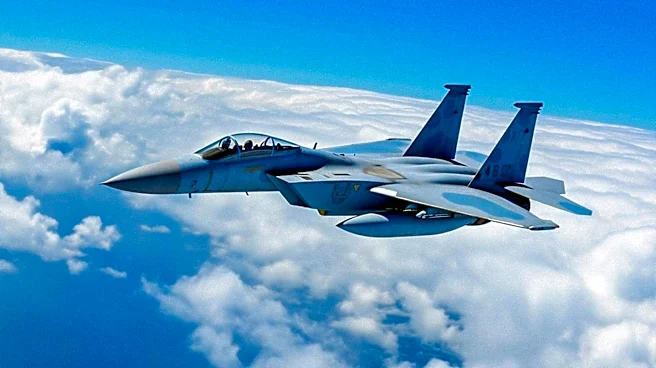
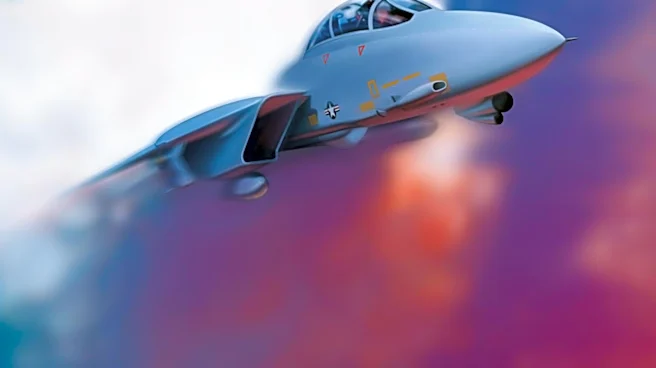
General Dynamics developed the F-111 aircraft as part of the TFX Program, initiated in the late 1950s to create a versatile aircraft for both the U.S. Air Force and Navy. The F-111 was designed to perform various tactical roles, aiming to reduce costs
and increase flexibility. Despite initial challenges, including technical failures and accidents, the F-111 eventually proved successful. The Air Force procured 531 units, and the aircraft was used in significant operations, such as the 1986 bombing of Libya and the 1991 Gulf War. The F-111's development faced criticism, particularly from the Navy, which ultimately rejected the F-111B variant due to performance issues. However, the Air Force continued to use the F-111 until the 1990s, with modifications enhancing its capabilities.
Why It's Important?
The F-111 program highlights the complexities and challenges of military aircraft development, particularly when balancing the needs of different military branches. The aircraft's eventual success underscores the importance of perseverance and adaptation in defense projects. The F-111's ability to perform multiple roles, including strategic bombing and electronic warfare, demonstrated the value of versatile military assets. This program also influenced future aircraft development, contributing to the evolution of multi-role combat aircraft. The F-111's history reflects broader themes in defense procurement, such as cost management, inter-service collaboration, and technological innovation.