


What's Happening?
Severe weather conditions in Gaza over the past 72 hours have resulted in the deaths of 14 people, including three children, according to Munir Al-Boursh, the director general of the Gaza-based Health Ministry. The storms have exacerbated the already
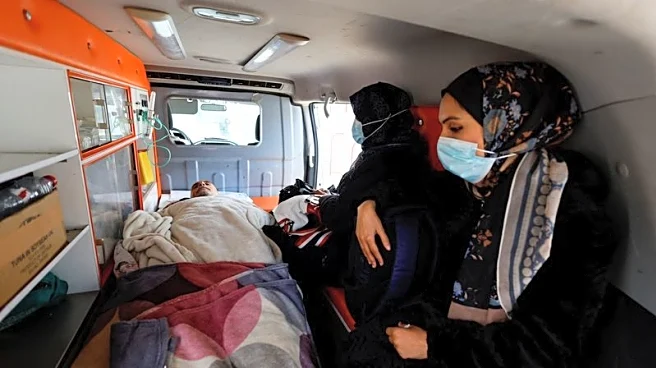
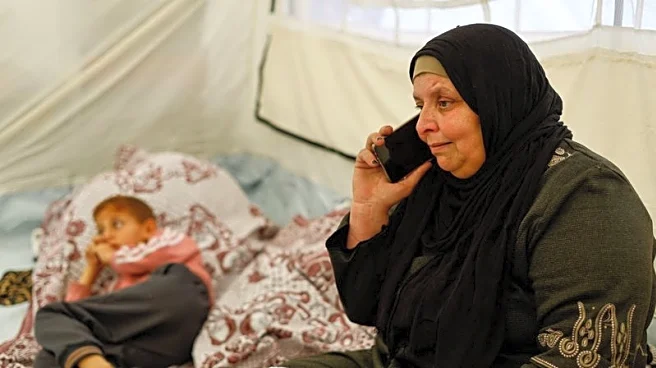
dire living conditions for many Palestinians who have been displaced by a two-year conflict that left much of the region in ruins. Thousands of tents and temporary shelters have been flooded, leaving residents wading through sewage, mud, and debris. Aid group Oxfam has criticized the systematic obstruction of aid, which has left many without proper shelter. The situation has been described as a 'complex humanitarian disaster' affecting at least 250,000 people, according to the Hamas-run government media office.
Why It's Important?
The severe weather in Gaza underscores the ongoing humanitarian crisis in the region, which has been compounded by the aftermath of a prolonged conflict. The inability to provide adequate shelter and basic necessities to displaced populations highlights the challenges faced by aid organizations and the international community in addressing the needs of vulnerable populations. The situation also raises questions about the effectiveness of current aid distribution mechanisms and the role of political decisions in exacerbating human suffering. The crisis in Gaza has broader implications for regional stability and international relations, particularly in light of the recent truce between Israel and Hamas.
What's Next?
The humanitarian response to the crisis in Gaza is expected to continue, with efforts to provide shelter and basic necessities to those affected by the storms. The Israeli agency COGAT has stated its commitment to facilitating the transfer of humanitarian aid, including food, water, and shelter materials. However, significant challenges remain, including the need to address gaps in the ceasefire agreement and the ongoing standoff with isolated Hamas militants. The international community, including the United States, is likely to continue pushing for progress in the peace process and the resolution of outstanding issues.
Beyond the Headlines
The situation in Gaza highlights the ethical and political dimensions of humanitarian aid distribution in conflict zones. The obstruction of aid and the resulting human suffering raise questions about the responsibilities of governments and international organizations in ensuring the protection of vulnerable populations. The crisis also underscores the need for long-term solutions to address the root causes of displacement and conflict in the region, including political, economic, and social factors.