

What's Happening?
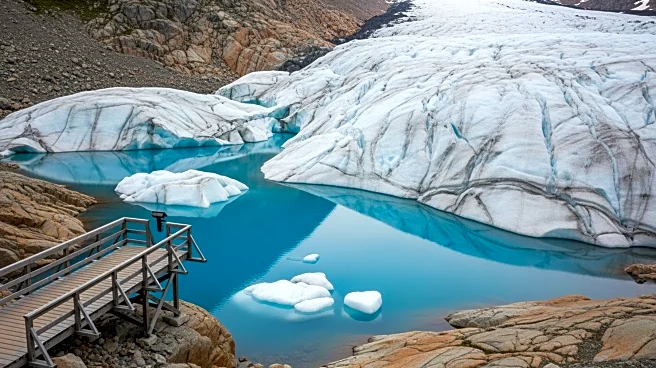
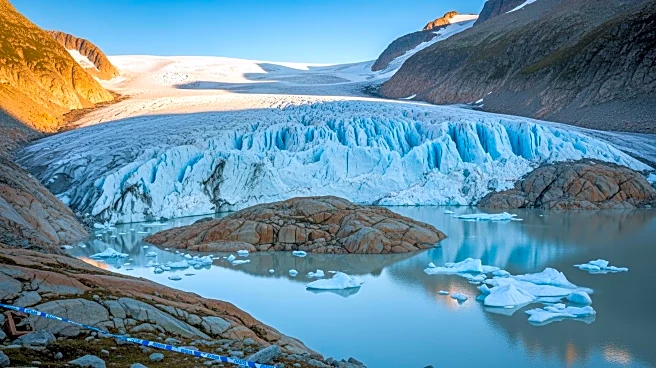
A recent study led by ETH Zurich, published in Nature Climate Change, forecasts a significant loss of glaciers in the Alps, with peak extinction expected between 2033 and 2041. The study highlights that under a global temperature rise of +2.7°C, only
about 110 glaciers would remain in Central Europe by 2100, representing a mere 3% of the current total. The research, which involved projections using global glacier models, indicates that regions with many small glaciers at lower elevations, such as the Alps, are particularly vulnerable. The study introduces the concept of 'Peak Glacier Extinction,' marking the year when the maximum number of glaciers disappear. This peak is projected to occur around 2041 under a +1.5°C warming scenario, with approximately 2,000 glaciers vanishing in a single year.
Why It's Important?
The findings underscore the urgent need for ambitious climate action to mitigate the effects of global warming. The disappearance of glaciers has profound implications for water resources, tourism, and natural hazard management. As glaciers retreat, they impact local economies, particularly in regions dependent on tourism. The study provides a new perspective by focusing on the number of disappearing glaciers rather than just mass and volume loss, offering insights for policymakers and communities to prepare for a future with less ice and water. The research also highlights the cultural significance of glaciers, emphasizing the importance of preserving their names and stories.
What's Next?
The study calls for immediate climate action to slow the rate of glacier loss. Policymakers, tourism sectors, and communities are encouraged to develop strategies to adapt to the changing landscape. Initiatives like the Global Glacier Casualty List aim to preserve the cultural heritage associated with glaciers, ensuring that their stories and significance are not forgotten. As the world continues to warm, the focus will be on implementing effective climate policies to reduce greenhouse gas emissions and limit temperature rise.
Beyond the Headlines
The retreat of glaciers not only affects sea-level rise but also has cultural and economic impacts. The loss of glaciers can lead to reduced tourism revenue and changes in local ecosystems. The study emphasizes the importance of understanding the broader implications of glacier loss, including its effects on biodiversity and regional climate patterns. By preserving the memory of lost glaciers, researchers hope to raise awareness about the importance of climate action and the need to protect remaining glaciers.