
What's Happening?
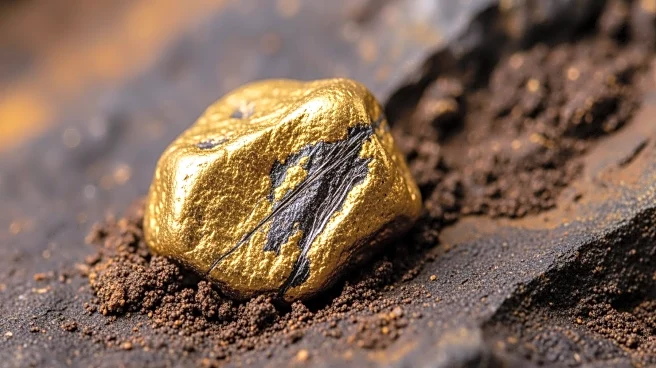
China has recently discovered a massive gold deposit in the Hunan province, estimated to contain over 1,000 tons of gold valued at approximately $85.9 billion. This 'superlarge' deposit was found in the Wangu
gold field in Pingjiang County, with geologists identifying 40 gold veins within a depth of around 6,562 feet. The discovery is considered one of the largest gold deposits ever documented, potentially rivaling South Africa's South Deep mine. This follows other significant finds in China, including a large undersea deposit off the coast of Laizhou and a major discovery in the Liaoning province.
Why It's Important?
The discovery of such a large gold deposit in China has significant implications for the global gold market. It positions China as a major player in gold production, potentially affecting global gold prices and market dynamics. The increased supply could lead to lower prices, impacting gold mining companies worldwide. Additionally, this discovery underscores China's growing influence in the global mining sector, which could shift economic power dynamics. For the U.S., this may mean increased competition in the mining industry and potential impacts on domestic gold production and pricing.
What's Next?
China is likely to continue its exploration and development of these gold resources, which could lead to increased production and exportation. This may prompt other countries, including the U.S., to reassess their mining strategies and investments to remain competitive. The global market will be watching how China manages these resources and the potential environmental and economic impacts of such large-scale mining operations.