









What's Happening?
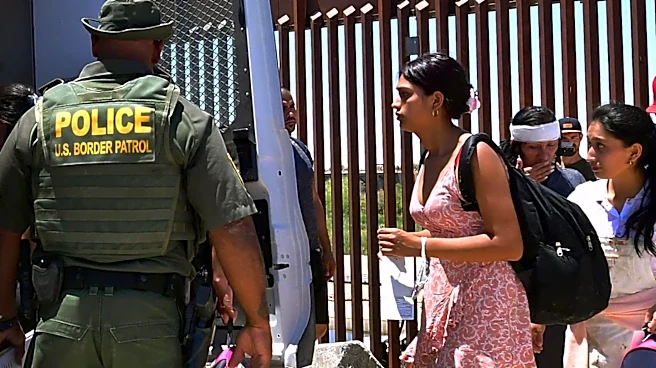
A new report from the Brookings Institution, updating previous research, confirms that increased Immigration and Customs Enforcement (ICE) activities in 2025 led to substantial and sustained declines in local employment across U.S. cities. The study,
which incorporates additional data through December 2025 and refines its empirical design, found that employment in cities experiencing enforcement surges fell below expected trajectories immediately after these surges. This shortfall continued to widen for nearly a year, showing no signs of recovery. The research indicates that the 2025 enforcement campaign, characterized by highly visible 'shock and awe' tactics, intensified economic disruptions beyond direct arrests. This effect is attributed to several mechanisms, including fear-driven withdrawal of workers from the labor force, operational disruptions for businesses due to sudden worker absences, and suppressed local demand as consumers curtailed spending. The report highlights that these job losses exceeded the number of individuals directly removed, affecting both likely undocumented immigrants and U.S.-born workers.
Why It's Important?
The findings from the Brookings Institution report underscore the significant economic consequences of large-scale immigration enforcement operations on local U.S. economies. The sustained decline in employment, extending for nearly a year without recovery, suggests a deeper and more pervasive impact than previously understood. This is important because it indicates that such enforcement tactics can destabilize local labor markets, reduce overall economic activity, and potentially lead to broader economic contractions in affected areas. Businesses face challenges in maintaining operations and staffing, while consumer spending decreases, creating a ripple effect throughout local economies. The report's emphasis on 'chilling effects'—where fear causes even eligible individuals, including U.S. citizens, to withdraw from economic participation—highlights a broader societal impact beyond direct enforcement targets. This can lead to reduced tax revenues for local governments and increased strain on social services, ultimately affecting the quality of life for all residents in these communities.
What's Next?
The persistent economic fallout documented in the Brookings report suggests that the effects of the 2025 ICE enforcement surges may continue to impact local economies for an extended period, even if enforcement levels decrease. Previous research cited in the report indicates that economic effects can persist well after arrests subside, with only a partial rebound in consumption expected within a year of enforcement cessation. This implies that affected cities may face ongoing challenges in employment recovery and economic growth. Policymakers and local governments might need to consider strategies to mitigate these long-term economic impacts, such as targeted support for businesses and communities disproportionately affected. The findings could also influence future debates on immigration policy, particularly regarding the economic trade-offs of different enforcement approaches. Further research will likely continue to track these economic trends to understand the full scope and duration of the impact.
Beyond the Headlines
Beyond the immediate economic metrics, the Brookings report touches upon deeper societal implications of immigration enforcement. The 'chilling effect' described, where fear leads individuals to disengage from public life and economic activity, points to a broader erosion of trust between communities and government institutions. This can have long-term consequences for civic participation, public health, and social cohesion, as individuals may avoid essential services or interactions out of fear. The report also implicitly raises questions about the ethical considerations of enforcement strategies that lead to widespread economic disruption and fear within communities, regardless of immigration status. The disproportionate impact on certain communities could exacerbate existing inequalities and create lasting social divisions. Understanding these broader implications is crucial for a holistic assessment of immigration policies and their true cost to society.