





What's Happening?
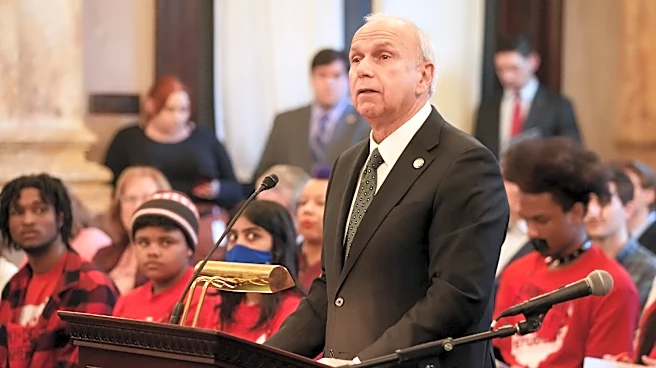
Baltimore lawmakers are considering the establishment of a new Department of Neighborhood Safety, a proposal put forth by City Council President Zeke Cohen in collaboration with Mayor Brandon Scott. This new department aims to integrate the city's existing
crime diversion office and enhance 911 responses for non-life-threatening incidents that do not require traditional law enforcement intervention. According to Letitia Dzirasa, Baltimore’s deputy mayor for equity, health and human services, the department would absorb the Mayor’s Office of Neighborhood Safety and Engagement (MONSE) and focus on calls such as welfare checks and nuisance reports. These calls, if deemed safe and not involving weapons, would be handled by teams comprising social workers and peer specialists. The administration envisions this department as a third branch of the city's public safety apparatus, alongside the police and fire departments. The proposal requires City Council approval, with legislation expected to be introduced soon.
Why It's Important?
This initiative represents a significant shift in Baltimore's approach to public safety, aiming to provide more appropriate responses to a substantial number of 911 calls. City officials estimate that approximately 22,000 annual 911 calls could be managed without police involvement, with about one-third related to the homeless population. By diverting these calls to trained civilian responders, the city seeks to free up police resources for more serious crimes and provide more effective, trauma-informed care for individuals experiencing mental health crises or other non-violent issues. This move is partly a response to public demand for alternatives to law enforcement, especially following incidents where police involvement in mental health crises resulted in fatalities. The program is modeled after a similar effort in Durham, North Carolina, which has successfully diverted 5% of 911 calls from police, compared to Baltimore's current 1.5%.
What's Next?
City Council President Zeke Cohen plans to introduce legislation to create the Department of Neighborhood Safety, with an aim to pass it by late October. If approved, the city will conduct a national search for leaders of the department. Officials estimate it would take about a year to make the program operational, based on Durham's experience. The department is expected to be launched with $15 million in restitution funds from opioid settlements, with additional state and federal grants supporting other aspects, including an overhaul of the city’s computer-aided dispatch system. Staffing details are yet to be determined, but employees will receive training in trauma-informed care, crisis de-escalation, and behavioral health. The existing Crisis Response Team, which includes officers and mental health counselors, is also slated for expansion alongside the new civilian-led teams.
Beyond the Headlines
This proposal delves into the complex intersection of public safety, mental health, and social services, reflecting a growing national conversation about reimagining policing. By creating a dedicated civilian response unit, Baltimore is addressing systemic issues that often lead to police involvement in situations better handled by social workers or mental health professionals. This approach could lead to improved outcomes for individuals in crisis, reduce instances of police-civilian conflict, and foster greater community trust. However, the success of the department will depend on adequate funding, robust training, effective inter-agency coordination, and careful evaluation of its impact. The initiative also highlights the ongoing challenges of implementing federal consent decrees, as Baltimore has been mandated to operate a 24-hour alternative response system since the 2015 death of Freddie Gray. The integration of MONSE into this new department also comes amid scrutiny of the office's past operations, underscoring the need for transparent and accountable governance.