








What's Happening?
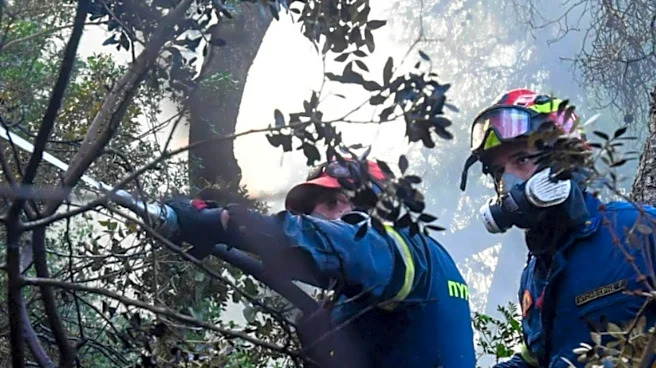
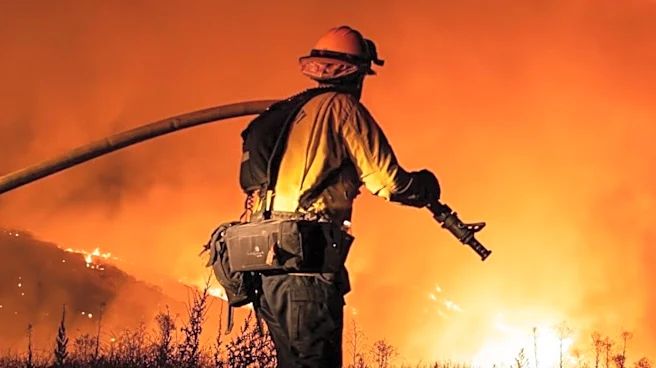
A 19-year-old volunteer firefighter has confessed to igniting a wildfire that severely damaged the Fontainebleau forest in France, an area historically significant and close to the Palace of Fontainebleau. The fire, which erupted approximately 60 kilometers
southeast of Paris, burned around 20,500 dunams before being brought under control by emergency services. The suspect reportedly used gasoline and a lighter to start the fire, although the motive remains undisclosed. The incident has left local fire services in shock, as they consider the act a betrayal of public trust and the core values of firefighting. The fire threatened the UNESCO-listed palace, a site associated with French monarchs and particularly favored by Napoleon Bonaparte. Despite the main flames being controlled, concerns persist about 'zombie fires'—smoldering fires that can reignite due to the forest's peat-rich soil.
Why It's Important?
The admission by the firefighter has significant implications for public trust in emergency services, highlighting vulnerabilities in volunteer recruitment and oversight. The incident underscores the potential for internal threats within organizations tasked with public safety. The fire's proximity to the Palace of Fontainebleau, a cultural and historical landmark, raises concerns about the protection of heritage sites from environmental and human threats. Additionally, the ongoing risk of 'zombie fires' poses a continuous challenge for firefighting efforts, potentially requiring prolonged resource allocation and strategic planning to prevent further damage. This event also emphasizes the broader issue of forest fire management in Europe, particularly in areas with historical and ecological significance.
What's Next?
Authorities are likely to conduct a thorough investigation to understand the motives behind the firefighter's actions and to prevent similar incidents in the future. This may lead to stricter regulations and oversight in the recruitment and monitoring of volunteer firefighters. The ongoing threat of 'zombie fires' will require sustained firefighting efforts, possibly involving advanced detection and suppression technologies. Additionally, there may be increased focus on protecting cultural heritage sites from environmental threats, potentially leading to new policies or collaborations between conservationists and emergency services. The incident could also prompt discussions on the psychological and social factors influencing individuals in emergency service roles.