




What's Happening?
A recent federal oversight report has identified significant overcrowding, food safety violations, and medical staff shortages at the Krome North Service Processing Center in Miami-Dade. The unannounced inspection by the Department of Homeland Security's
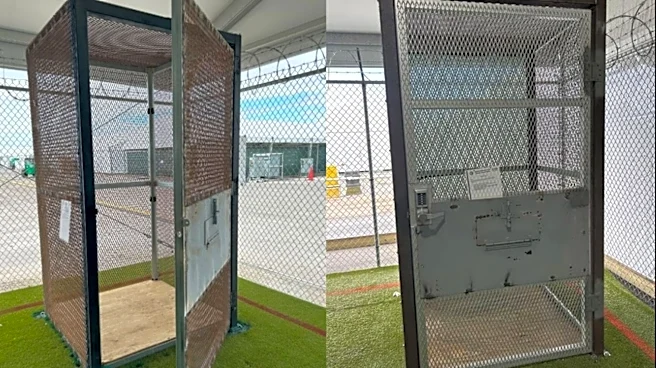
Office of Inspector General in May 2025 found the facility operating at approximately 25% above its maximum capacity, housing 1,102 detainees against a capacity of 882. Inspectors documented saturated admission holding rooms, overcrowded housing modules, detainees held in processing areas for over 12 hours, and individuals sleeping on temporary cots due to a lack of permanent beds. Food service issues included improperly thawed raw chicken, uncovered food exposed to contamination, and frozen food left in direct sunlight. Medical operations were also a concern, with 15 medical vacancies and a lack of a mandatory quality improvement program. Despite these findings, Republican Congressman Carlos Giménez, who represents South Florida, toured the facility around the same time as the inspections and described it as adequate and operating at capacity, stating, 'there is nothing going on in there that is cause for alarm.' Telemundo 51 reached out to Giménez's office for comment on the new findings but received no response.
Why It's Important?
The discrepancy between Congressman Giménez's assessment and the federal report's findings highlights a critical issue in oversight and accountability within U.S. immigration detention facilities. The report's detailed account of overcrowding, unsanitary conditions, and medical deficiencies at Krome raises serious concerns about the welfare and human rights of detainees. This situation could lead to increased scrutiny of ICE operations and potentially trigger calls for reform from civil rights organizations and other lawmakers. The health risks posed by food safety violations and medical staff shortages could have severe consequences for detainees, potentially leading to outbreaks of illness and inadequate care for those with existing conditions. Furthermore, the mixing of detainees with different security classifications, as noted in the report, could compromise the safety of both detainees and staff. This issue underscores the ongoing debate about the conditions in immigration detention centers and the need for transparent and effective oversight to ensure compliance with established standards.
What's Next?
ICE has acknowledged the nine recommendations issued by the inspectors and stated that measures have been taken to address the deficiencies, including adding temporary housing space, implementing new supervision procedures, expanding training requirements, and hiring additional medical personnel. While three recommendations have been closed, six remain open, pending further documentation and verification. Federal Representative Debbie Wasserman Schultz, a Florida Democrat, has criticized the conditions and called for accountability, sending a letter with other Democratic congressional delegation members to federal officials to demand greater scrutiny. The ongoing nature of the open recommendations suggests that continued monitoring and follow-up will be necessary to ensure that all identified issues are fully resolved. The public and advocacy groups will likely continue to pressure ICE and congressional representatives for transparency and improvements in detention conditions, potentially leading to further investigations or legislative actions aimed at reforming immigration detention policies.
Beyond the Headlines
The situation at the Krome Detention Center, as revealed by the federal report, points to deeper systemic challenges within the U.S. immigration detention system. The persistent issues of overcrowding and inadequate care, despite previous inspections and public outcry, suggest a potential disconnect between policy and practice. The differing perspectives of Congressman Giménez and the federal inspectors also highlight the political complexities surrounding immigration and detention. This scenario raises ethical questions about the treatment of individuals in custody and the responsibility of government agencies to ensure humane conditions. The long-term implications could include a re-evaluation of detention capacities, funding for immigration facilities, and the implementation of more robust oversight mechanisms. The ongoing debate about the conditions at Krome could also influence public opinion on immigration policies and potentially lead to broader discussions about alternatives to detention, emphasizing community-based support and legal aid for asylum seekers and migrants.