





What's Happening?
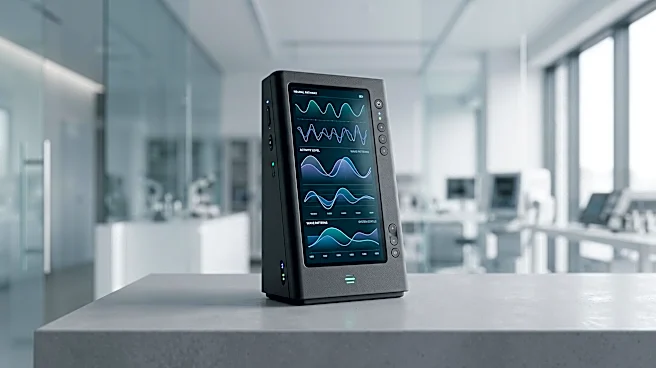
Masimo, a Danaher company, has received U.S. Food and Drug Administration (FDA) 510(k) clearance for its smartSedLine™ brain function monitoring solution. This next-generation technology is designed to provide clinicians with faster and more consistent
insights into a patient's response to anesthesia, enabling more individualized care. smartSedLine™ features an enhanced Patient State Index (PSi) algorithm that offers improved performance, including a quicker PSi induction response and increased stability under low-power electroencephalography (EEG) conditions. These advancements aim to help clinicians make more informed decisions regarding the depth of sedation, particularly during anesthesia induction and in situations where EEG signals are weak. Dr. Basil Matta, Chief Medical Officer at Masimo, emphasized that understanding individual patient responses to anesthesia is crucial for optimizing sedation depth and informing care, especially for high-risk and elderly patients. This clearance marks Masimo's seventh FDA clearance in 2026, highlighting its ongoing innovation in patient monitoring.
Why It's Important?
The FDA clearance of smartSedLine™ is significant for advancing patient safety and outcomes during surgical procedures requiring anesthesia. Anesthesia management is complex, and individual patient responses can vary widely. Traditional EEG interpretation can be challenging and requires specialized training, which can limit its widespread clinical use. smartSedLine™ aims to simplify this by translating raw EEG data into more easily interpretable information through its PSi and Density Spectral Array (DSA) features. The faster PSi response and improved stability under low-power EEG conditions mean clinicians can gain earlier and more reliable insights into a patient's sedation state. This allows for more precise titration of anesthetic agents, potentially leading to improved hemodynamic stability in vulnerable patients and reducing the risks associated with over- or under-sedation, such as postoperative cognitive dysfunction or awareness during surgery. This technology supports a more personalized approach to anesthesia care, which is crucial for optimizing brain health during perioperative periods.
What's Next?
With FDA clearance, Masimo will likely focus on the commercialization and widespread adoption of smartSedLine™ in healthcare facilities across the U.S. This will involve educating clinicians on the benefits and proper use of the new technology, integrating it into existing patient monitoring systems, and potentially conducting further studies to demonstrate its impact on long-term patient outcomes. The smartSedLine™ solution is available through a new module and EEG sensor, which are plug-and-play with compatible monitors like Masimo Root®. The company may also explore combining smartSedLine™ with other monitoring technologies, such as O3® Regional Oximetry, to create a more comprehensive Brain Health Platform. Continued innovation in this area could lead to even more sophisticated algorithms and integrated solutions for perioperative brain monitoring, further enhancing patient safety and recovery.
Beyond the Headlines
The development of smartSedLine™ reflects a growing emphasis on brain health as a critical component of overall patient care, particularly in surgical settings. Beyond simply preventing awareness during surgery, optimizing the depth of sedation can have profound long-term implications for cognitive function, especially in elderly or high-risk patients. This technology underscores a shift towards proactive brain protection during medical procedures, moving beyond basic vital sign monitoring to more nuanced assessments of neurological status. The ability to provide individualized care based on real-time brain activity data could reduce the incidence of postoperative delirium and cognitive decline, which are significant concerns in an aging population. This advancement also highlights the increasing role of advanced algorithms and data analytics in transforming complex physiological signals into actionable clinical insights, paving the way for more intelligent and personalized medical interventions.