







What's Happening?
The University of South Carolina (USC) is establishing itself as a central hub for research and development in molten salt nuclear reactors. Ted Besmann, director of the General Atomics Center for Transformational Nuclear Technologies at the Molinaroli
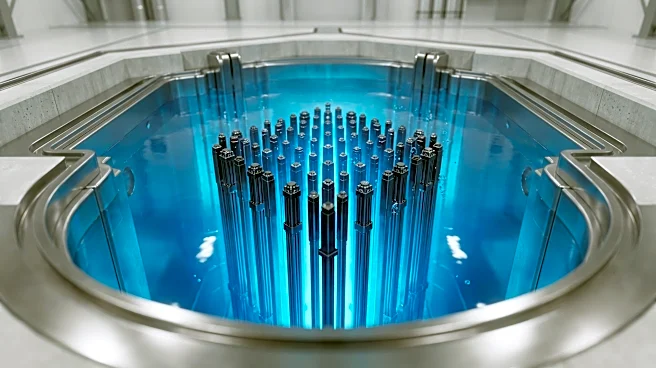
College of Engineering and Computing, is spearheading this effort. Unlike traditional nuclear reactors that use solid fuel rods cooled by water, molten salt reactors dissolve uranium into a liquid fuel. This innovative approach offers potential safety benefits and allows for smaller reactor designs, which can incrementally increase power generation. Besmann manages an international database that compiles chemical information about salt mixtures suitable for these reactors, a resource utilized by reactor developers, safety regulators, national laboratories, and university researchers globally. USC also possesses specialized equipment to analyze the thermodynamic and chemical properties of materials used in molten salt reactors, providing a unique service to the nuclear industry, including national laboratories seeking faster and more cost-effective analysis.
Why It's Important?
The development of molten salt reactors by institutions like USC is crucial for the future of U.S. energy independence and environmental sustainability. Traditional nuclear reactors, while effective, present challenges related to high pressure operation and the risk of meltdowns, as seen in events like Fukushima. Molten salt reactors mitigate these risks by operating at much higher temperatures without the need for extreme pressurization, significantly reducing the potential for catastrophic failures. Their smaller, modular design allows for more flexible and incremental power generation, which is attractive to utility companies that can scale up power as needed without committing to massive, single-plant investments. This technology could diversify the U.S. energy portfolio away from fossil fuels and meet the growing electricity demands from sectors like data centers, offering a more economically efficient and safer alternative for nuclear power generation.
What's Next?
While the technology for molten salt reactors has existed since the 1960s, increased interest and investment in nuclear energy over the past five years are accelerating its development. Ted Besmann estimates that commercial molten salt reactors could be operational in the United States by 2035. USC's ongoing research, including the management of the international database and the development of a molten salt reactor roadmap, will continue to be pivotal in this timeline. The university's specialized analytical services will likely attract more collaborations with national laboratories and private companies, further solidifying its role as a leader in nuclear materials analysis. The next steps involve continued research to refine the technology, address regulatory frameworks for these new reactor types, and secure further investment to transition from experimental stages to commercial deployment.
Beyond the Headlines
The shift towards molten salt reactors represents a significant paradigm change in nuclear energy, moving beyond the conventional solid-fuel, water-cooled designs that have dominated for decades. This innovation could lead to a more resilient and adaptable energy infrastructure in the U.S., reducing reliance on large, centralized power plants and enabling distributed energy solutions. The inherent safety features of molten salt reactors, such as their ability to operate at atmospheric pressure and their passive safety mechanisms, could also improve public perception of nuclear power, which has historically been hampered by safety concerns. Furthermore, the economic efficiency of building smaller, modular reactors could democratize nuclear energy development, allowing a broader range of utility companies and even smaller communities to invest in nuclear power without the prohibitive costs and risks associated with traditional large-scale projects. This could foster a new era of nuclear innovation and deployment.