





What's Happening?
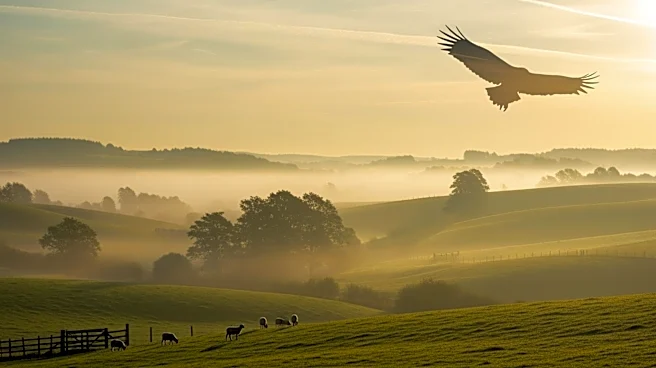
In Cumbria, the lambing season has brought renewed attention to the planned reintroduction of white-tailed eagles, sparking concerns among local farmers. The debate centers on the potential threat these apex predators pose to livestock, particularly lambs.
While some areas have not experienced issues, others report significant predation. The reintroduction plan has led to protests and discussions among farmers, who are wary of the impact on their flocks. The situation highlights the challenges of balancing wildlife conservation with agricultural interests.
Why It's Important?
The reintroduction of white-tailed eagles is part of broader conservation efforts to restore natural ecosystems. However, it poses a dilemma for farmers who rely on livestock for their livelihoods. The potential for increased predation could lead to economic losses and necessitate changes in farming practices. This situation underscores the need for effective management strategies that consider both conservation goals and the needs of agricultural communities. The outcome of this debate could influence future wildlife reintroduction projects and policies.
Beyond the Headlines
The controversy over white-tailed eagles reflects broader tensions between conservation and agriculture. It raises questions about how to achieve ecological restoration without compromising the viability of rural economies. The situation also highlights the importance of stakeholder engagement and the need for adaptive management approaches that can address diverse perspectives and interests. As discussions continue, finding a balance between ecological and economic priorities will be crucial for sustainable development.