










What's Happening?
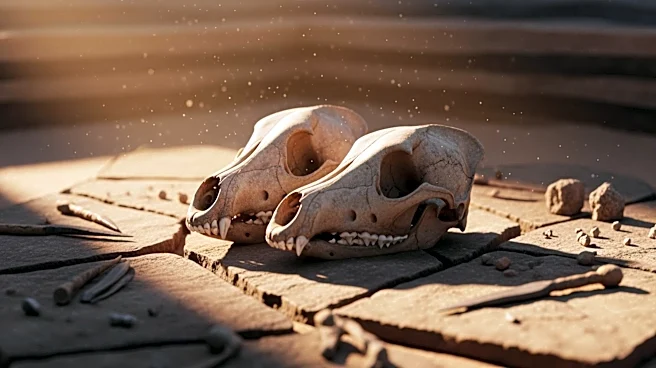
Researchers have discovered three dog skeletons buried above a human grave in central Turkey, dating back nearly 16,000 years. This finding, confirmed through ancient DNA analysis, represents the oldest known genetic evidence of domestic dogs. The study,
involving multiple international institutions, suggests that these early dogs were already forming close relationships with humans long before the advent of agriculture. The dogs were likely involved in hunting and protection, sharing food resources with humans, as indicated by isotope analysis of their diet.
Why It's Important?
This discovery provides significant insights into the early domestication of dogs and their role in human societies. The evidence of dogs being buried alongside humans suggests a deep socio-symbolic bond, highlighting the importance of canines in prehistoric communities. Understanding these early relationships can shed light on the evolution of human-animal interactions and the domestication process. The genetic link between these Anatolian dogs and those found in prehistoric Europe also suggests a widespread distribution and integration of dogs across different human groups, influencing the genetic makeup of modern dog populations.