





What's Happening?
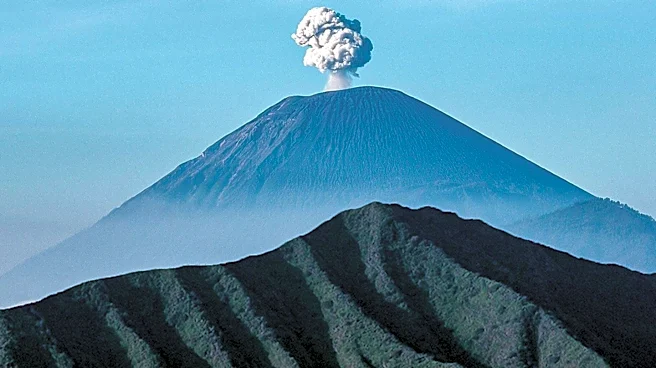
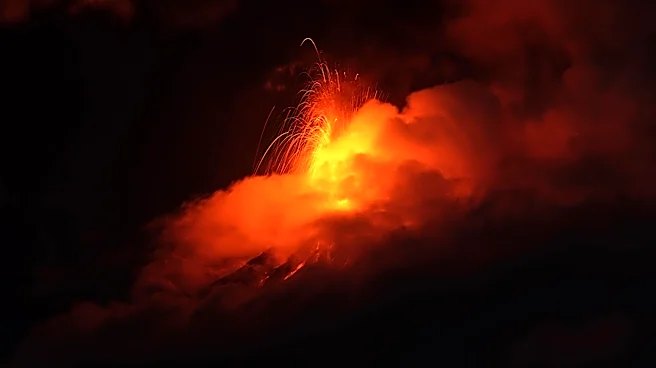
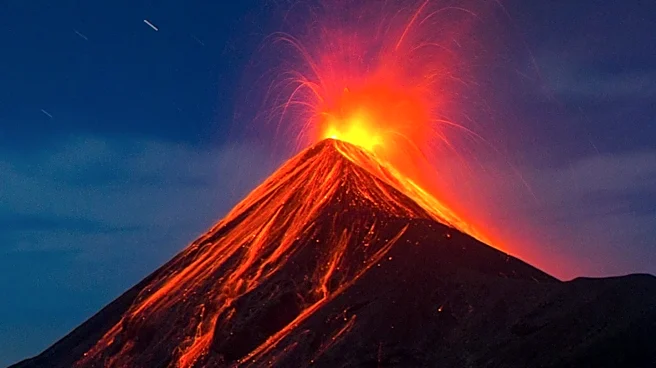
Guatemala's Fuego volcano has erupted, leading to a red alert issued by emergency services. The eruption, which began on Monday morning, intensified by nightfall, prompting the evacuation of hundreds of residents from nearby villages. The volcano, located
less than 100 kilometers from Guatemala City, spewed rivers of lava and ash plumes reaching six kilometers into the sky. Approximately 1,700 people have sought shelter after fleeing their homes. This event follows a similar eruption in 2018 that resulted in significant casualties.
Why It's Important?
The eruption of Fuego volcano poses significant risks to the local population and infrastructure. The red alert indicates the highest level of danger, necessitating immediate evacuation and emergency response. The 2018 eruption serves as a stark reminder of the potential for loss of life and property. The current situation underscores the need for effective disaster preparedness and response strategies in volcanic regions. The impact on local communities, agriculture, and air travel could be substantial, highlighting the broader implications for Guatemala's economy and public safety.
What's Next?
Authorities are likely to continue monitoring the volcano's activity closely, with further evacuations possible if conditions worsen. Emergency services will focus on providing shelter and support to displaced residents. The government may also seek international assistance to manage the crisis and mitigate its impact. Long-term, there may be discussions on improving volcanic monitoring systems and community preparedness to better handle future eruptions.