




What's Happening?
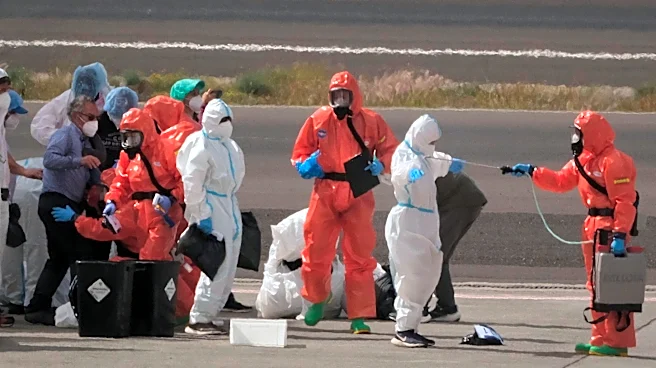
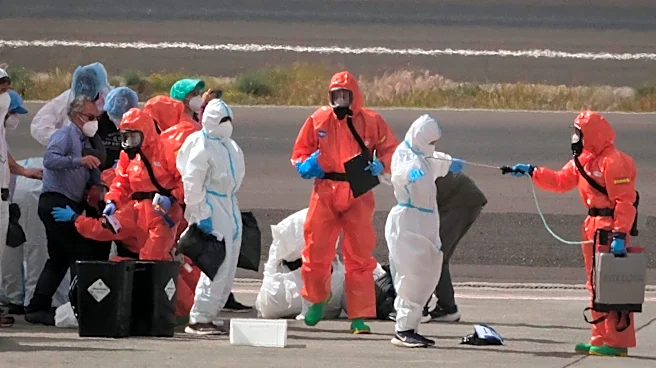
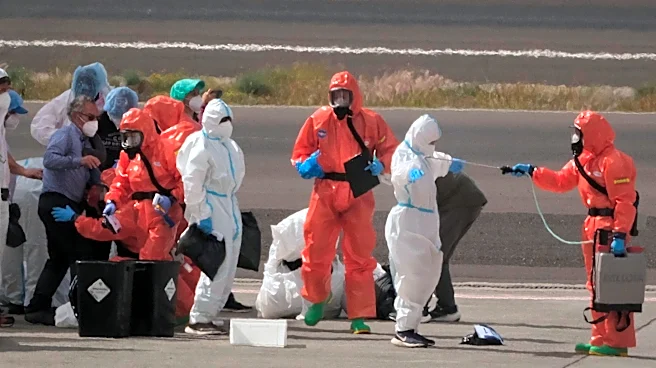
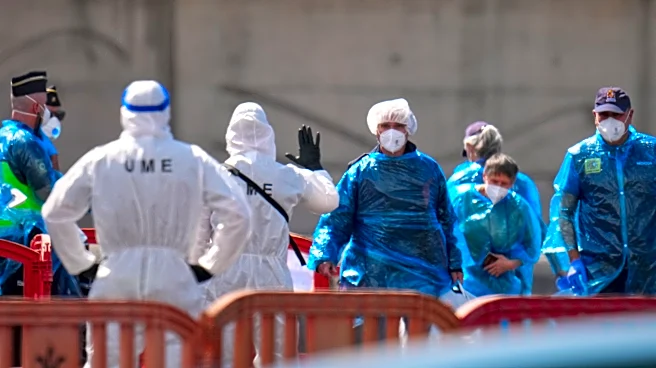
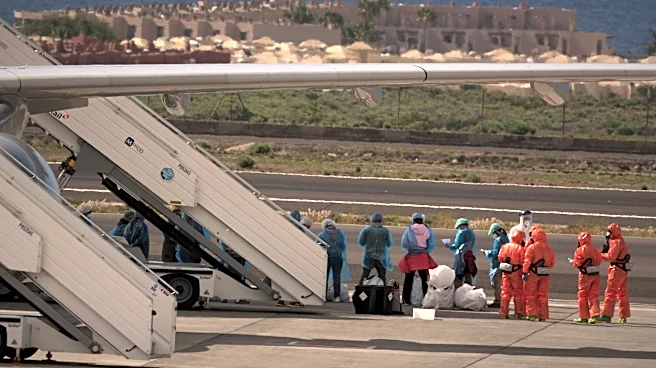
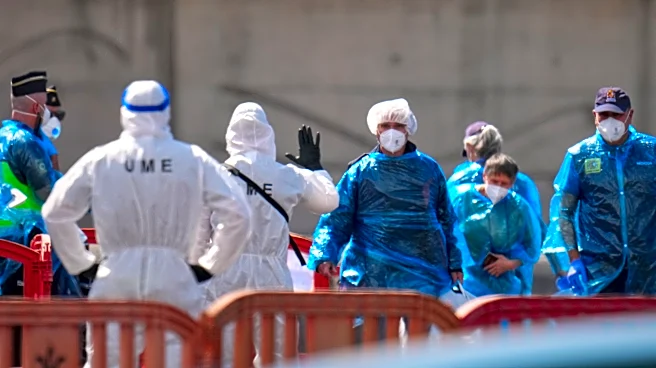
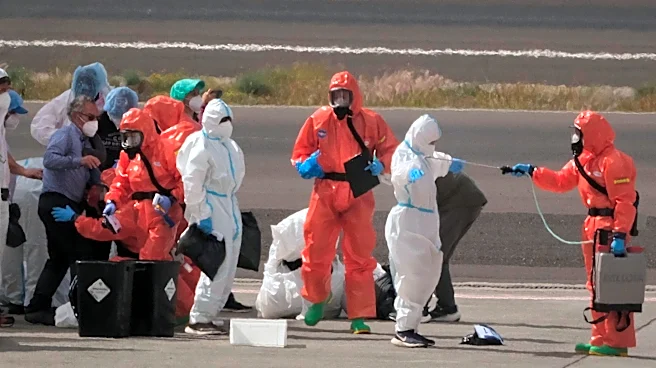
World Health Organization Director-General Dr. Tedros Adhanom Ghebreyesus has arrived in Tenerife to personally oversee the evacuation of over 100 people from the MV Hondius cruise ship, which is dealing with an outbreak of the rare hantavirus. The ship, flagged
under the Netherlands, is expected to dock at Tenerife, where the evacuation process will begin. The outbreak involves the Andes strain of the virus, which is the only variation that can be transmitted through close contact with an infected individual. Despite this, health experts have stated that the risk of widespread transmission is low. The WHO has recommended that passengers be isolated for 42 days following their last exposure to the virus. The evacuation plan includes six flights to the EU and four to non-EU countries, with 17 Americans being transported to the National Quarantine Center in Omaha, Nebraska.
Why It's Important?
The hantavirus outbreak on the MV Hondius cruise ship highlights the ongoing challenges of managing infectious diseases in a post-COVID world. The WHO's involvement underscores the importance of international cooperation in handling potential health crises. The situation also serves as a reminder of the psychological impact of past pandemics, as public concern remains high despite assurances of low transmission risk. The evacuation and quarantine measures are crucial in preventing any potential spread of the virus, particularly given the global movement of passengers. This incident could influence future protocols for handling similar outbreaks, emphasizing the need for rapid response and transparent communication to maintain public trust.
What's Next?
Following the evacuation, the focus will shift to monitoring the health of the evacuated passengers during their isolation period. The WHO and national health authorities will likely review the effectiveness of the response to improve future outbreak management strategies. The incident may prompt discussions on enhancing health screening and monitoring on cruise ships and other forms of international travel. Additionally, the psychological impact on the public and the tourism industry could lead to increased demand for safety assurances and improved health protocols in travel settings.