


What's Happening?
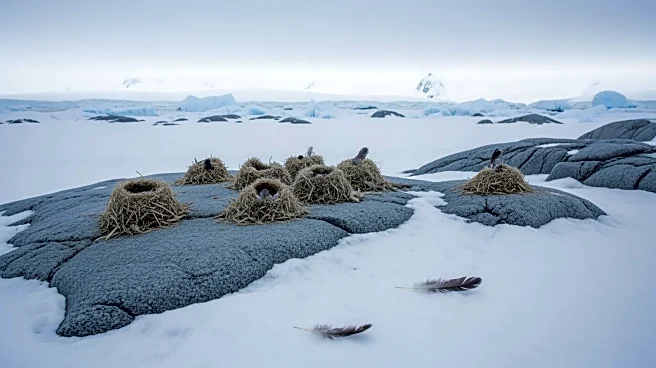
A study led by Erasmus MC and the University of California, Davis, has documented the first mass die-off of skuas in Antarctica due to the avian influenza virus H5N1. Over 50 skuas died during the 2023 and 2024 summers, marking the first confirmed deaths
from the virus in the region. Skuas, which are scavengers, play a crucial role in the Antarctic ecosystem, and their deaths raise concerns about the spread of the virus to other species, including penguins. The study highlights the virus's adaptability and its potential to affect both wildlife and humans globally. Researchers are calling for enhanced surveillance and preventive measures to track the virus's spread in Antarctica.
Why It's Important?
The spread of H5N1 to Antarctica signifies a troubling expansion of the virus, which has already impacted wildlife and agriculture worldwide. The virus's presence in such a remote region underscores its adaptability and the challenges in controlling its spread. The potential impact on the Antarctic ecosystem, particularly if the virus spreads to other species, could have significant ecological consequences. The study emphasizes the need for global cooperation in monitoring and managing avian flu outbreaks to prevent further ecological and economic damage. The findings also highlight the importance of understanding and mitigating the virus's impact on both wildlife and human health.