
What's Happening?
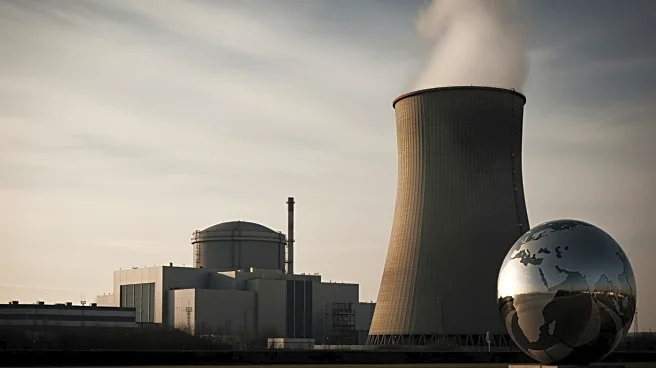
President Trump has initiated a significant push to expand nuclear power in the United States, aiming to quadruple its use by 2050. This initiative includes a comprehensive revision of Nuclear Regulatory
Commission regulations to facilitate the construction of new reactors. Westinghouse, a key player in the nuclear industry, plans to build 10 large reactors in the U.S. by 2030. However, the administration's approach has raised concerns due to its demand for government ownership stakes in private companies involved in these projects. This move is seen as a departure from traditional free-market principles, with the government potentially exerting control over company management and operations.
Why It's Important?
The expansion of nuclear power is critical for meeting the growing energy demands in the U.S., especially as the administration has reduced support for renewable energy sources like wind and solar. However, the government's involvement in private enterprises could undermine the principles of capitalism, leading to inefficiencies and potential mismanagement. The financial burden on taxpayers and the risk of political interference in business decisions are significant concerns. Additionally, the inherent dangers of nuclear power, such as waste management and security risks, remain unresolved, posing long-term challenges.
What's Next?
As the nuclear power expansion progresses, Congress is expected to scrutinize the administration's deals and the implications of government ownership in private companies. The success of this initiative will depend on balancing regulatory support with maintaining free-market dynamics. Stakeholders, including environmental groups and industry leaders, will likely engage in debates over the safety, economic viability, and environmental impact of increased nuclear power reliance.
Beyond the Headlines
The shift towards nuclear power under President Trump's administration highlights a broader trend of government intervention in strategic industries. This approach raises ethical and economic questions about the role of government in the private sector and the potential for cronyism. The long-term implications for U.S. energy policy and international competitiveness in the nuclear sector will be closely watched.