

What's Happening?
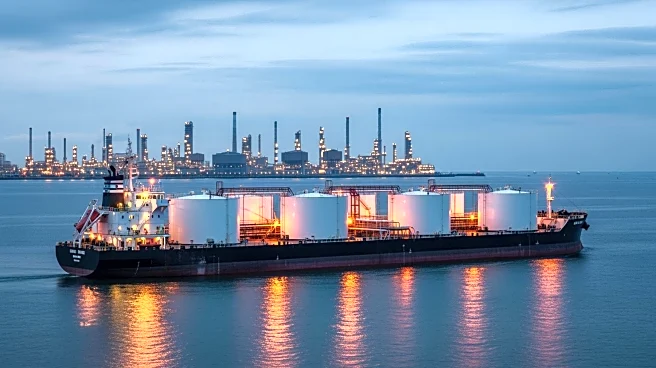
Venezuela's state-run oil company, PDVSA, has begun storing crude and fuel oil in tankers within Venezuelan waters due to mounting inventories. This situation arises as the U.S. has seized ships linked to Venezuela, creating a backlog. PDVSA produces
approximately 1.1 million barrels of crude daily, leading to quickly filling onshore tanks, particularly at the Jose terminal. To manage this, PDVSA has started transferring oil to tankers, a strategy used in the past to avoid production cuts. Despite the challenges, Chevron, a major joint-venture partner, continues its operations without disruption, exporting crude grades produced in collaboration with PDVSA. However, the U.S. actions have left many cargoes stranded, and PDVSA is negotiating with customers to continue receiving oil cargoes bound for China.
Why It's Important?
The situation highlights the geopolitical tensions between the U.S. and Venezuela, impacting global oil markets. The U.S. blockade and sanctions on Venezuelan oil are part of broader efforts to pressure President Nicolas Maduro's government. This has significant implications for Venezuela's economy, heavily reliant on oil exports, and for global oil supply chains, particularly affecting China, a major recipient of Venezuelan crude. The use of floating storage indicates PDVSA's attempt to maintain production levels despite logistical challenges. The ongoing negotiations and potential changes in contracts could affect international oil prices and trade dynamics.
What's Next?
PDVSA's strategy to use floating storage is a temporary measure, and the company may need to explore further options if the U.S. continues its enforcement actions. The Venezuelan government has introduced legislation imposing severe penalties for actions perceived as piracy or blockades, indicating a hardening stance against external pressures. The situation may lead to increased diplomatic tensions and could prompt responses from other nations involved in Venezuelan oil trade. The outcome of PDVSA's negotiations with its customers will be crucial in determining the future of its oil exports.
Beyond the Headlines
The reliance on floating storage underscores the fragility of Venezuela's oil infrastructure and the broader economic challenges facing the country. The situation also raises questions about the long-term sustainability of PDVSA's operations under continued international pressure. The legal measures introduced by the Venezuelan government reflect a defensive posture, potentially escalating conflicts with the U.S. and affecting international relations. The developments could also influence global discussions on energy security and the role of sanctions in international diplomacy.