




What's Happening?
Representative Seth Magaziner (D-RI) has co-sponsored the DHS Body-Worn Camera and Dashboard Camera Accountability Act. This legislation, introduced by Ranking Member Bennie G. Thompson (D-MS), aims to require all Department of Homeland Security (DHS)
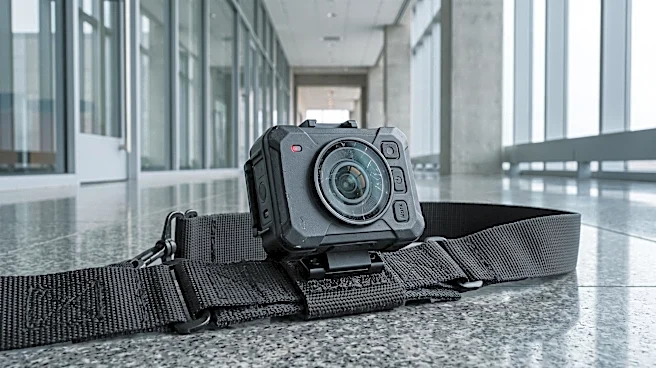
law enforcement officers, including ICE agents and CBP officers, to wear body cameras. Additionally, it mandates that DHS law enforcement vehicles be equipped with dashboard cameras. The bill establishes department-wide requirements for camera usage during arrests, enforcement operations, and public interactions. It also seeks to strengthen requirements for preserving and releasing footage to enhance transparency and accountability within DHS law enforcement. A recent Government Accountability Office (GAO) report in 2025 indicated that both ICE and CBP had opted not to fund their body-worn camera programs, halting deployments initiated under the Biden administration. The GAO also found that these agencies lacked clear operational guidance for camera use, increasing the risk of non-compliance, and that ICE's reliance on manual camera activation could lead to missed critical recordings.
Why It's Important?
This legislation is significant for addressing concerns about transparency and accountability within federal law enforcement agencies. The absence of body camera programs and clear operational guidelines, as highlighted by the GAO report, creates a gap in oversight that this bill aims to fill. Mandating body cameras and dashboard cameras could provide crucial evidence in cases of use of force or alleged misconduct, thereby protecting both the public and law enforcement officers. The bill's provisions for long-term retention of footage and expedited release in serious incidents are designed to foster public trust and ensure that federal agents are held accountable for their actions. This initiative reflects a broader national conversation about police accountability and the role of technology in ensuring justice and transparency in law enforcement interactions with the public.
What's Next?
The DHS Body-Worn Camera and Dashboard Camera Accountability Act will proceed through the legislative process in Congress. As a co-sponsored bill, it will require further debate, potential amendments, and votes in both the House and Senate to become law. If passed, DHS agencies, including ICE and CBP, would be required to implement comprehensive body camera and dashboard camera programs, develop clear operational guidelines, and establish protocols for footage preservation and release. This would necessitate significant logistical and financial planning within DHS. The legislation's proponents, including Ranking Member Thompson, have indicated that this matter will be a priority for a Democratic Congress, suggesting continued advocacy for its passage in future sessions.
Beyond the Headlines
The push for body cameras within DHS extends beyond immediate accountability, touching upon broader issues of civil liberties and government oversight. The legislation's emphasis on prohibiting real-time facial recognition and establishing privacy safeguards indicates an awareness of potential misuse of surveillance technology. By mandating regular reporting to Congress, the bill aims to create an ongoing mechanism for oversight, ensuring that the implementation and effectiveness of camera programs are continuously monitored. This initiative could set a precedent for other federal agencies and contribute to a more standardized approach to law enforcement transparency across the U.S. The debate surrounding this bill also highlights the ongoing tension between national security imperatives and the protection of individual rights, particularly in interactions with federal agents.