








What's Happening?
The U.S. House of Representatives has voted to end a record 76-day government shutdown, restoring funding for most of the Department of Homeland Security (DHS) but leaving the contentious issue of Immigration and Customs Enforcement (ICE) funding unresolved.
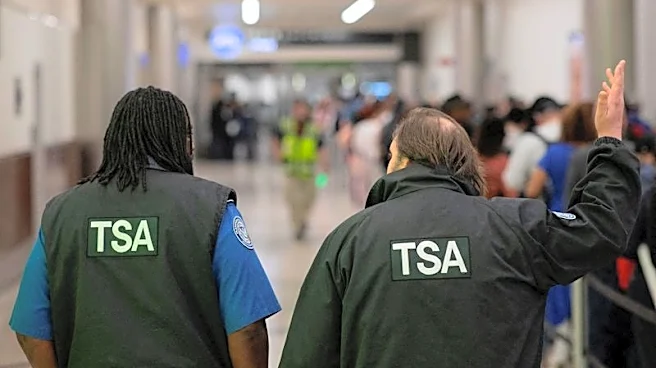
The shutdown had caused significant disruption, including potential airport delays. The resolution excludes funding for ICE and the Border Patrol, with Republicans planning to pursue enforcement funding through budget reconciliation, a process that bypasses Democratic opposition.
Why It's Important?
The end of the shutdown alleviates immediate operational disruptions for DHS and its employees, who have been working without pay. However, the ongoing dispute over ICE funding highlights deep political divisions over immigration policy. The use of budget reconciliation to secure funding for immigration enforcement could set a precedent for future legislative battles, potentially impacting the balance of power between political parties and the legislative process.
What's Next?
The battle over ICE funding is expected to continue, with Republicans pushing for increased enforcement funding and Democrats advocating for oversight and civil rights considerations. The use of budget reconciliation could lead to further political clashes, particularly as the midterm elections approach. The outcome of these negotiations will have significant implications for U.S. immigration policy and the broader political landscape.