







What's Happening?
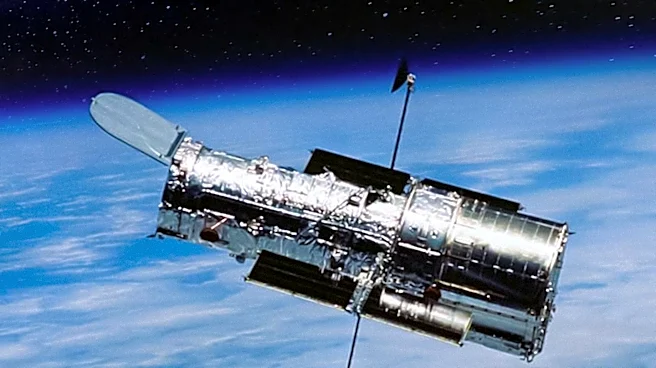
The Hubble Space Telescope, launched in 1990, initially faced a significant setback due to a flaw in its primary mirror. The mirror, which was ground to the wrong shape by a fraction of a human hair, caused spherical aberration, leading to blurred images.
This error was attributed to a misalignment during the assembly of a device used to guide the mirror's shaping. Despite the flaw, the telescope was designed for in-orbit servicing, allowing astronauts to install corrective optics in 1993. This repair involved adding smaller optics with the opposite error to correct the light path, effectively giving Hubble 'glasses' to restore its intended optical performance.
Why It's Important?
The correction of Hubble's mirror was crucial for the success of the telescope, which had been a flagship project for NASA, costing over $1.5 billion. The repair not only salvaged the investment but also enabled Hubble to fulfill its mission of providing unprecedented views of the universe. The successful correction demonstrated the importance of designing space instruments with serviceability in mind, allowing for in-orbit repairs and upgrades. This mission underscored the value of human spaceflight capabilities in maintaining and enhancing space-based observatories, which continue to contribute significantly to astronomical research and discoveries.
What's Next?
Following the successful correction, Hubble has continued to operate and provide valuable scientific data. Future servicing missions have been planned to replace aging components and install new instruments, ensuring the telescope remains at the forefront of astronomical research. The lessons learned from Hubble's initial flaw and subsequent repair have informed the design and planning of future space telescopes, emphasizing the need for rigorous testing and the ability to address unforeseen issues in space.
Beyond the Headlines
The Hubble repair mission highlighted the importance of organizational communication and quality assurance in large-scale scientific projects. The initial error was preventable, as conflicting evidence existed before launch, but was overlooked due to overconfidence in certain test results. This incident serves as a reminder of the need for thorough oversight and the willingness to question assumptions in complex engineering endeavors. The success of the repair mission also illustrates the potential for human ingenuity to overcome significant challenges, even in the harsh environment of space.