




What's Happening?
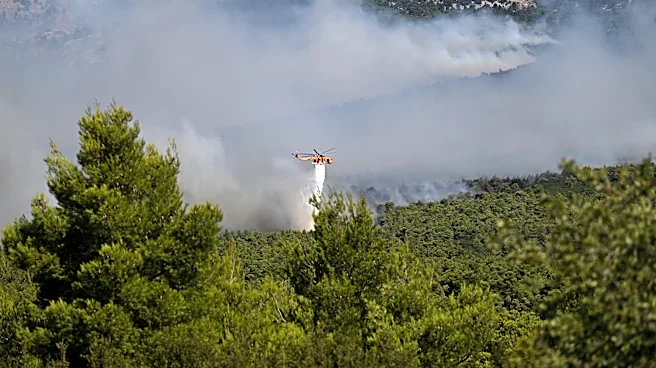
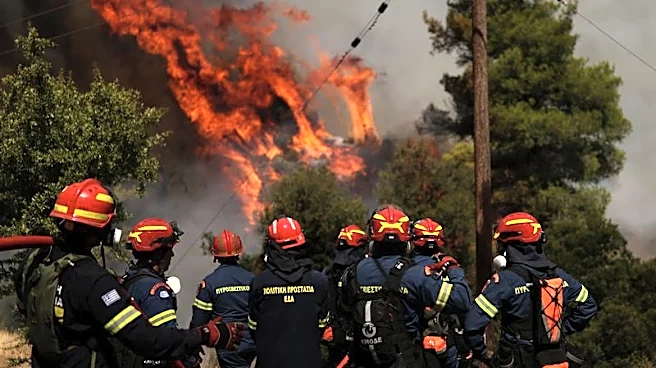
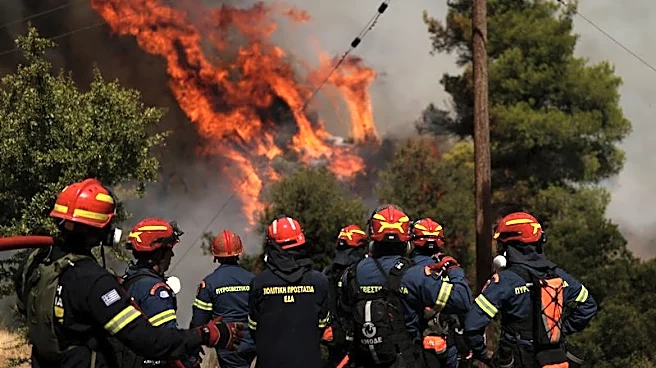
Two Greek firefighting helicopters collided midair while battling a wildfire west of Athens, Greece. The incident occurred as the helicopters were engaged in efforts to control a wind-driven blaze in the region. Each helicopter was manned by a two-person
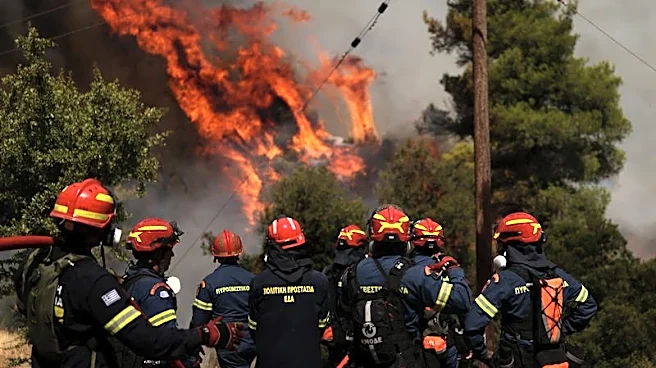
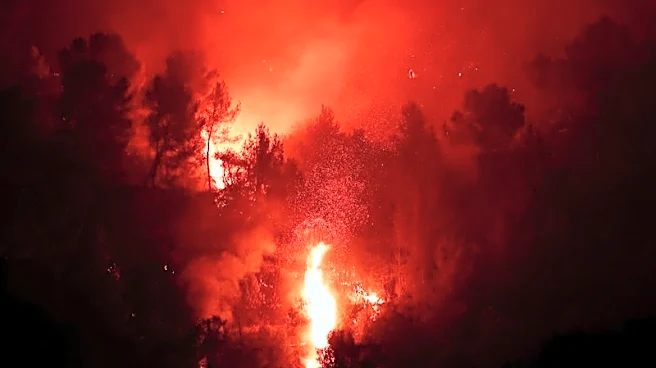
crew, and a search-and-rescue operation was initiated near Porto Germeno. The collision highlights the dangers faced by emergency responders amidst Europe's escalating wildfire crisis. Strong winds have exacerbated the situation, spreading flames deeper into the Athens region and prompting evacuations. The fire in Greece is part of a broader wildfire emergency affecting several European countries, including France and Spain, where large-scale evacuations have been necessary.
Why It's Important?
The collision of firefighting helicopters underscores the severe challenges faced by emergency services in combating wildfires, which are becoming increasingly frequent and intense due to climate change. The situation in Greece is particularly critical, as the region has a history of deadly wildfires, such as the 2018 Mati fire that resulted in 104 fatalities. The ongoing fires in Europe have led to mass evacuations, affecting hundreds of thousands of people and stretching emergency resources thin. This incident highlights the urgent need for enhanced firefighting strategies and international cooperation to address the growing threat of wildfires exacerbated by climate change.
What's Next?
Authorities in Greece and other affected European countries are likely to continue their firefighting efforts with increased urgency. The Greek government may need to reassess its firefighting strategies and resources to prevent future incidents. International support and collaboration could play a crucial role in managing the crisis. Additionally, there may be calls for more robust climate action policies to mitigate the underlying causes of such extreme weather events.
Beyond the Headlines
The collision of the helicopters not only highlights the immediate dangers faced by emergency responders but also raises questions about the adequacy of current firefighting resources and protocols. The incident may prompt a review of safety measures and training for firefighting personnel. Furthermore, the broader implications of climate change on public safety and infrastructure resilience are likely to be scrutinized, emphasizing the need for comprehensive climate adaptation strategies.