





What's Happening?
The second administration of President Trump is characterized by significant economic volatility, with policies diverging from stated goals of lowering inflation and reducing national debt. The U.S. inflation rate reached 3.4% year over year in July,
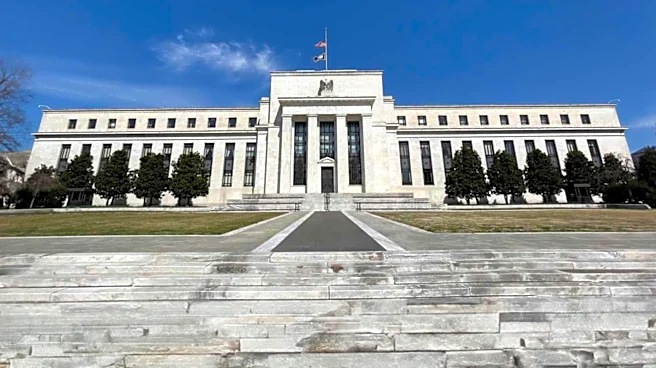
exceeding the Federal Reserve's 2% target, partly due to an escalating conflict in Iran. Despite this, President Trump has repeatedly pressured Federal Reserve chairmen to lower interest rates, which could exacerbate inflation. His administration has also engaged in trade disputes with U.S. allies and is threatening to halt trade with countries holding a surplus with the U.S. unless the Fed reduces rates. These actions create a challenging environment for the Federal Reserve to justify lowering rates, as such a move could accelerate price increases and worsen the economic situation.
Why It's Important?
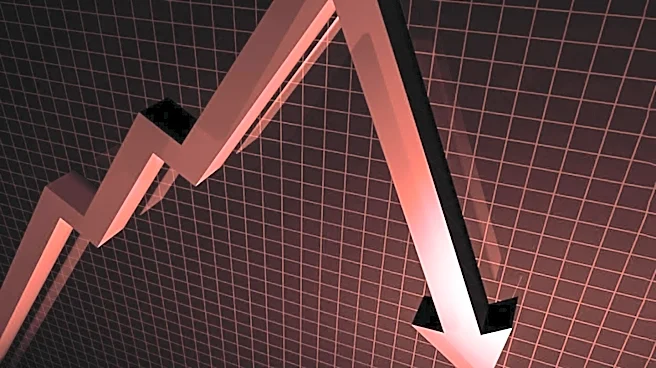
President Trump's economic policies and rhetoric are creating significant uncertainty and potential instability in the U.S. stock market and broader economy. The divergence between the administration's stated goals and its actions, particularly regarding inflation and interest rates, complicates the Federal Reserve's ability to manage the economy effectively. High inflation makes it difficult for the Fed to lower rates, as doing so could further fuel price increases. The rising 10-Year U.S. Treasury yield, now around 4.80%, indicates increasing borrowing costs for corporations and individuals, which is particularly detrimental to the technology sector's substantial investments in artificial intelligence data centers. The S&P 500's historically high cyclically adjusted price-to-earnings (CAPE) ratio of 41.4, well above its average of 17.4, suggests an overvalued market, making it vulnerable to a potential crash amidst this political and economic uncertainty.
What's Next?
The ongoing pressure from President Trump on the Federal Reserve to lower interest rates, coupled with his trade threats, suggests continued economic uncertainty. Investors are advised to consider diversifying their portfolios into profitable, reasonably valued companies to mitigate risks. Keeping some cash reserves ready for potential market downturns is also suggested. The market will closely watch for any further policy announcements from the Trump administration regarding trade and monetary policy, as well as the Federal Reserve's responses to these pressures and the evolving inflation data. The potential for a stock market correction or crash remains a significant concern, especially given the S&P 500's high valuation and the increasing cost of borrowing. The interplay between political decisions and economic indicators will be critical in shaping the market's trajectory.
Beyond the Headlines
The current economic climate under President Trump highlights a fundamental tension between political objectives and independent monetary policy. The administration's aggressive stance on trade and its demands for lower interest rates, despite inflationary pressures, challenge the traditional roles and independence of institutions like the Federal Reserve. This situation raises questions about the long-term stability of economic governance and the potential for political interference to undermine sound economic principles. The historical context of market crashes following periods of high valuation and economic uncertainty, such as the dot-com bubble, serves as a cautionary tale. The current environment could lead to a re-evaluation of how political leadership impacts market confidence and the resilience of economic systems, potentially triggering shifts in investor behavior and regulatory frameworks.