






What's Happening?
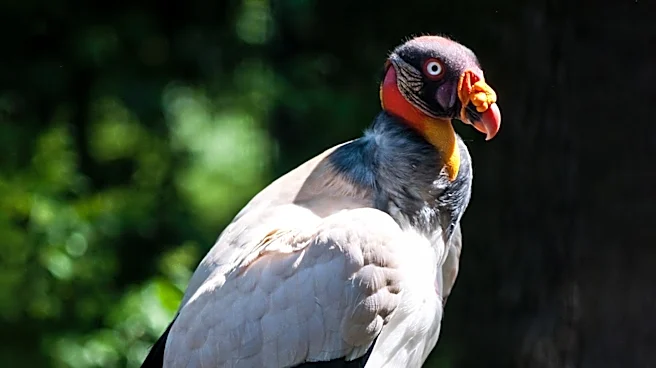
Dr. Robyn Miller, director of the Auburn University Raptor Center, highlights the critical ecological and human health benefits provided by vultures, despite their often-negative perception. Vultures, frequently considered 'bad omens' due to their diet
of carrion, play a vital role in neutralizing dangerous diseases such as rabies, botulism, and anthrax. These diseases, if not contained by efficient scavengers like vultures, could be spread by other mammals or feral dogs, posing a significant threat to human populations. Dr. Miller emphasizes that there is a direct correlation between healthy vulture populations and human health, underscoring their importance beyond their aesthetic appeal. The Raptor Center also focuses on the rehabilitation of injured raptors and educational outreach, aiming to foster stewardship for these birds and raise awareness about human activities' impact on raptor populations.
Why It's Important?
The re-evaluation of vultures' role is crucial for public health and ecological stability in the U.S. and globally. By neutralizing pathogens in carrion, vultures prevent the spread of diseases that could otherwise lead to outbreaks affecting both human and animal populations. This natural sanitation service reduces the burden on public health systems and protects livestock and wildlife. The negative perception of vultures, often fueled by cultural superstitions, hinders conservation efforts. Recognizing their ecological value can lead to increased support for their protection, which is particularly important as they are among the most threatened groups of birds worldwide. Their role as natural bio-controls underscores the interconnectedness of ecosystems and human well-being, advocating for a shift in public perception and policy towards these essential scavengers.
What's Next?
Continued educational initiatives by organizations like the Auburn University Raptor Center will be vital in changing public perception and promoting the conservation of vultures. These efforts could involve more public outreach programs, scientific studies to quantify their impact on disease control, and collaborations with agricultural and public health sectors. Policy discussions might emerge regarding the protection of vulture habitats and the reduction of threats such as poisoning, which often stem from misconceptions about their role. Increased awareness could also lead to more funding for raptor rehabilitation centers and research into vulture populations, ensuring their long-term survival and continued ecological benefits. The goal is to move beyond traditional 'bad omen' superstitions towards a scientific understanding and appreciation of their indispensable environmental services.
Beyond the Headlines
The narrative surrounding vultures as 'bad omens' reflects a broader human tendency to misinterpret natural phenomena based on superficial observations rather than scientific understanding. This cultural bias has significant ecological consequences, as it often leads to neglect or even harm towards species that provide essential, albeit unglamorous, ecosystem services. The case of vultures highlights the ethical imperative to challenge ingrained superstitions with scientific facts, fostering a more informed and respectful relationship with the natural world. It also points to the long-term shifts required in environmental education, moving beyond charismatic megafauna to appreciate all components of an ecosystem, especially those that perform critical, often unseen, functions for planetary and human health. This shift is fundamental for developing comprehensive conservation strategies that address the full spectrum of biodiversity.