
What's Happening?
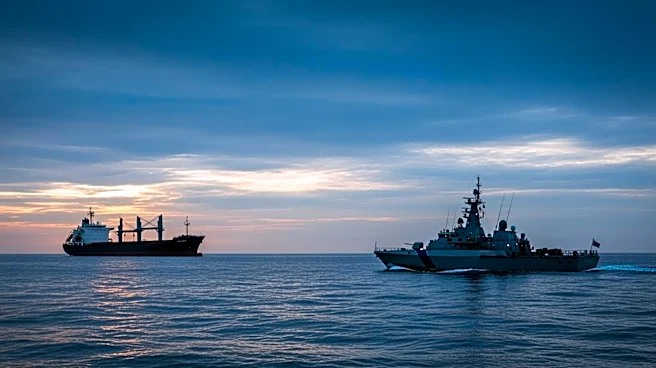
Iran has declared that it will keep the strategic Strait of Hormuz closed until the United States lifts its naval blockade on Iranian ports. The closure comes amid ongoing tensions between Iran and the U.S.,
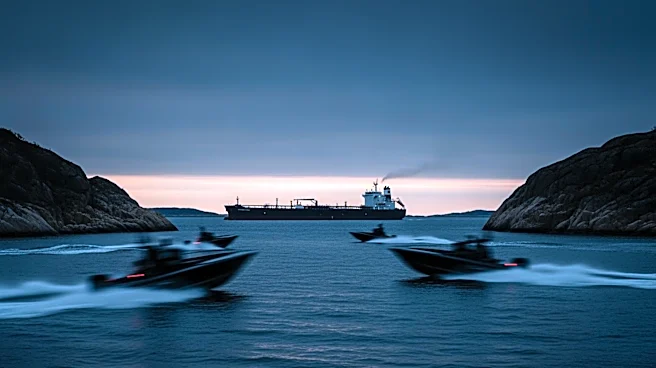
with the current ceasefire set to expire soon. Iranian parliamentary speaker Mohammad Bagher Ghalibaf indicated that while there has been progress in talks, significant gaps remain. The closure of the strait, a critical maritime trade corridor, has disrupted global oil shipments and heightened tensions in the region. Iran's Islamic Revolutionary Guard Corps has warned that any attempt to pass through the strait without permission will be considered cooperation with the enemy.
Why It's Important?
The Strait of Hormuz is a vital passage for global oil trade, and its closure has significant implications for energy markets worldwide. The ongoing blockade and closure have led to increased oil prices and uncertainty in global supply chains. The situation underscores the strategic importance of the strait and Iran's leverage in negotiations with the U.S. The conflict has broader implications for international relations, as countries dependent on Middle Eastern oil face potential supply disruptions. The outcome of the talks could either ease tensions or escalate the conflict, impacting global economic stability.
What's Next?
With the ceasefire set to expire soon, the situation remains precarious. The U.S. is sending a delegation to Pakistan for further talks, but Iran has not confirmed its participation. The closure of the strait and the blockade continue to strain diplomatic relations, and without progress, military actions could resume. Stakeholders, including global oil markets and diplomatic entities, are closely monitoring the situation, hoping for a resolution that avoids further escalation.