

What's Happening?
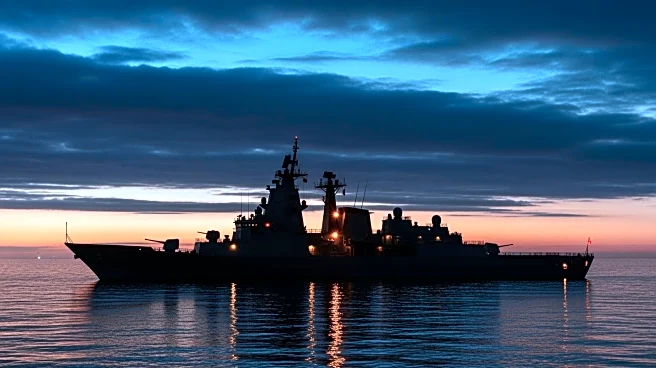
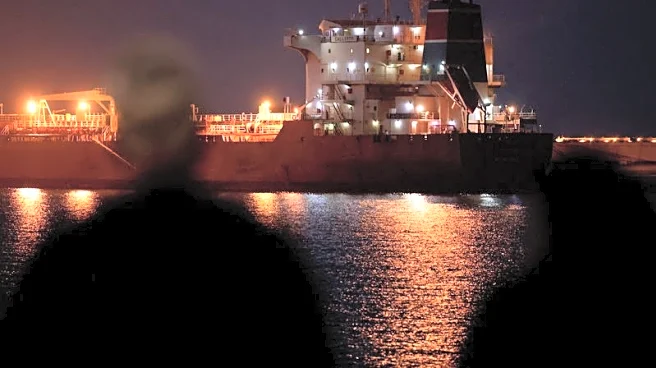
Despite the ongoing conflict and effective closure of the Strait of Hormuz, approximately 90 ships, including oil tankers, have managed to cross the strait, allowing Iran to continue exporting millions of barrels of oil. This has been achieved through
'dark' transits that evade Western sanctions, with many vessels having ties to Iran. The strait, a critical passage for global oil and gas transport, has seen a significant reduction in traffic since the conflict began, with about 20 vessels attacked in the area. However, Iran has exported over 16 million barrels of oil since early March, with China being the largest buyer. The U.S. has pressured allies to reopen the strait to stabilize oil prices, which have surged above $100 per barrel.
Why It's Important?
The continued export of Iranian oil through the Strait of Hormuz, despite the conflict, has significant implications for global oil markets and geopolitical dynamics. The strait is a vital chokepoint for global energy supplies, and its disruption has contributed to rising oil prices, impacting economies worldwide. Iran's ability to maintain exports highlights its strategic control over the strait and its resilience against sanctions. The situation underscores the geopolitical tensions in the region, with potential consequences for international relations and energy security. The U.S. and its allies face challenges in balancing sanctions enforcement with the need to stabilize global oil markets.
What's Next?
Future developments may include increased diplomatic efforts to ensure safe passage through the Strait of Hormuz, potentially involving negotiations with Iran. The U.S. and its allies might continue to explore military or diplomatic strategies to reopen the strait fully. The situation could lead to further fluctuations in oil prices, affecting global economic stability. Additionally, Iran's strategic use of the strait as a bargaining tool may influence future international negotiations and sanctions policies.
Beyond the Headlines
The ongoing situation in the Strait of Hormuz raises broader questions about the effectiveness of sanctions and the geopolitical power dynamics in the Middle East. Iran's ability to navigate sanctions and maintain oil exports could embolden other nations facing similar pressures. The conflict also highlights the vulnerability of global energy supply chains to regional conflicts and the need for diversified energy sources. Long-term, this may accelerate efforts to develop alternative energy routes and reduce dependency on Middle Eastern oil.