





What's Happening?
France has deployed its first dedicated drone-combat unit to Romania as part of Mission Aigle, a French-led initiative aimed at strengthening NATO’s eastern flank. This deployment marks a significant step in the French Army's accelerated integration of drone warfare
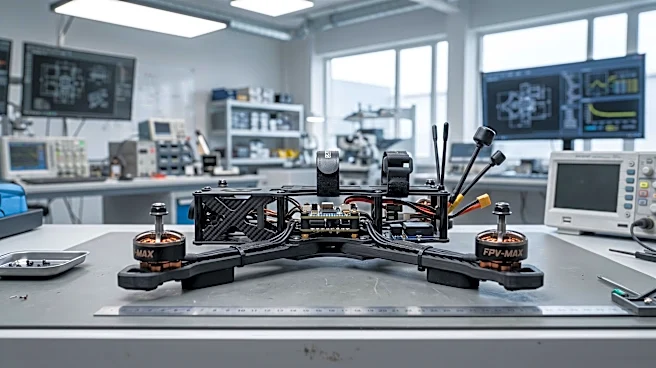
capabilities, inspired by observations from the conflict in Ukraine. The unit, originating from the 1st Marine Infantry Regiment (1er RIMa), is an experimental all-drone squadron that has demonstrated considerable effectiveness in exercises. General Jacques de Montgros, Army Chief of Staff, indicated that France plans to establish approximately 15 drone-combat units by summer 2027, with more to follow by the end of next year. A second drone unit is slated for deployment to Poland for an exercise next month. These units are designed to operate alongside conventional forces, integrating surveillance drones, FPV one-way attack drones, and loitering munitions to disrupt enemy maneuvers and command structures.
Why It's Important?
This development signifies a major shift in military doctrine and capabilities within NATO, particularly concerning the eastern flank's defense. The rapid adoption and scaling of drone-combat units by France underscore the perceived effectiveness of drone warfare in modern conflicts, as demonstrated in Ukraine. For the U.S. and its NATO allies, this initiative provides a blueprint for enhancing tactical capabilities, improving reconnaissance, and increasing the lethality of ground forces against potential adversaries. The interoperability of these French drone units with NATO allies is a key design feature, suggesting a collaborative approach to integrating advanced drone technology across the alliance. This move could prompt other NATO members to accelerate their own drone warfare programs, leading to a more technologically advanced and adaptable collective defense posture. It also highlights the evolving nature of logistics, with supply chains needing to adapt to drone and battery requirements rather than traditional ammunition.
What's Next?
France is set to continue scaling up its drone-combat capabilities, with plans for a second unit deployment to Poland and the establishment of numerous additional units by 2027. This expansion will likely involve further collaboration with French firms on technologies such as swarming, autonomous terminal guidance, and launch canisters. Other NATO members may observe and potentially adopt similar strategies, leading to a broader integration of dedicated drone units across the alliance. Future exercises will likely focus on refining tactics, improving counter-drone measures, and enhancing electronic warfare capabilities to operate in contested environments. The French Army will also continue to address challenges such as maintaining a balance between human mass and drone pilots, ensuring lethality in unfavorable weather conditions, and developing effective defenses against enemy UAVs. The ongoing evolution of drone technology and tactics will necessitate continuous adaptation in training and doctrine.
Beyond the Headlines
The rapid integration of drone-combat units by France reflects a profound transformation in military strategy, moving beyond traditional combined-arms tactics. This shift raises significant ethical considerations regarding autonomous targeting and the potential for reduced human oversight in lethal engagements, particularly with the development of 'queen and worker' drone concepts aiming for autonomous engagement. Legally, the proliferation of such advanced drone capabilities will likely prompt discussions and potential revisions of international laws of armed conflict, especially concerning the use of AI in warfare. Culturally, it signifies a growing reliance on technology to achieve tactical superiority, potentially altering the traditional roles and skill sets of soldiers. In the long term, this development could lead to a new arms race in drone technology and counter-drone systems, fundamentally reshaping the future of warfare and requiring continuous adaptation from military forces worldwide to maintain a strategic edge.