
What's Happening?
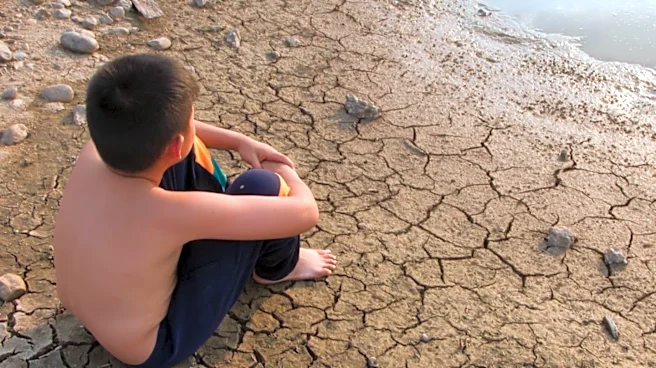
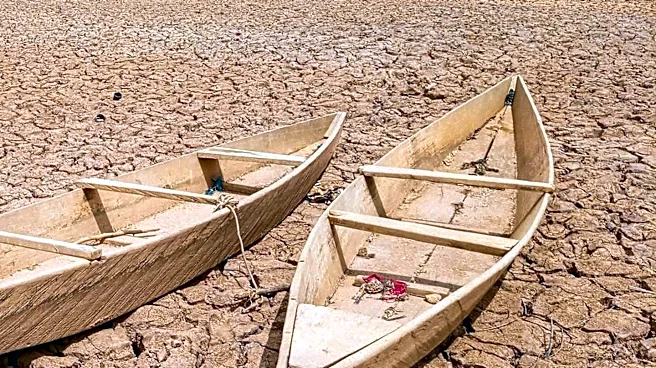
Pakistan is facing a severe water scarcity crisis despite being endowed with five rivers, monsoon rains, and numerous glaciers. Per capita water availability has drastically fallen from approximately 5,260
cubic meters in 1951 to under 1,000 cubic meters today, placing the country well below the threshold for water scarcity. This decline is attributed not to a lack of water resources, but to inadequate means of capturing, storing, and reusing available water. The country experiences a paradox of floods during monsoon seasons followed by severe droughts, as water arrives in overwhelming abundance but is not effectively managed for dry periods. Traditional water systems like 'karez' are falling into disrepair, and excessive pumping of groundwater through tubewells is depleting aquifers faster than they can be replenished, leading to lower groundwater levels and increased salinity in some areas.
Why It's Important?
Pakistan's water crisis has significant implications for its economic stability, food security, and public health. The agricultural sector, a cornerstone of the Pakistani economy, is particularly vulnerable to water shortages, threatening livelihoods and potentially leading to food insecurity. The cycle of floods and droughts also causes widespread displacement and economic disruption. For the U.S., this situation highlights the broader global challenge of water resource management, especially in regions critical for international stability and trade. A destabilized Pakistan due to resource scarcity could have geopolitical ramifications, affecting regional security and potentially requiring international humanitarian aid. Furthermore, the issues of groundwater depletion and inefficient water use in Pakistan offer lessons for other nations, including parts of the U.S. that face similar challenges in arid and semi-arid regions, emphasizing the need for sustainable water policies and infrastructure.
What's Next?
Pakistan needs to implement comprehensive strategies for water storage and management to bridge the gap between supply and demand. This includes repairing and maintaining traditional water systems, investing in new infrastructure to capture and store monsoon rains, and promoting water-efficient farming practices. The use of solar-powered tubewells needs careful regulation to prevent further groundwater depletion, ensuring they are deployed only where aquifers can support them. Urban areas can benefit from rooftop rainwater harvesting and recharge wells, while dry regions require small reservoirs and cultivation of drought-resistant crops. The challenge lies in translating existing water policies and laws into effective action, requiring government investment, long-term commitment, and community participation. International cooperation and technological assistance could also play a crucial role in supporting Pakistan's efforts to achieve water security.
Beyond the Headlines
The paradox of Pakistan's water situation—abundance followed by scarcity—underscores a fundamental failure in governance and infrastructure planning. This isn't merely an environmental problem but a deeply entrenched socio-economic and political issue. The decline of traditional water management systems like 'karez' reflects a loss of indigenous knowledge and community-based solutions, replaced by less sustainable modern practices. The reliance on groundwater pumping, while providing short-term relief, creates a long-term ecological debt, leading to land subsidence and irreversible environmental damage. The ethical dimension involves ensuring equitable access to water, particularly for vulnerable populations in rural and arid regions. The long-term implications include potential internal migration, increased social unrest, and a significant impediment to sustainable development, highlighting the urgent need for a paradigm shift in how water is valued and managed.