
What's Happening?
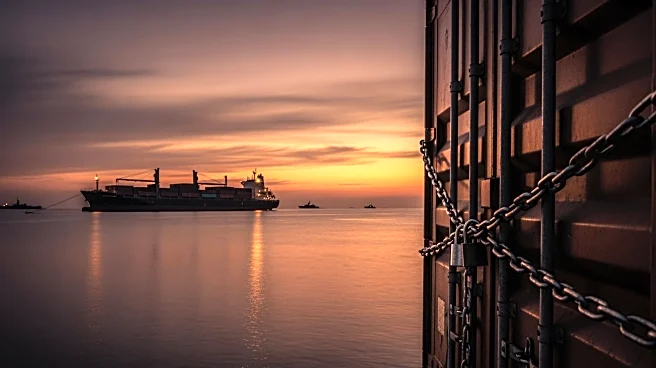
U.S. special forces recently intercepted a ship in the Indian Ocean carrying military equipment from China to Iran. This operation, reported by the Wall Street Journal, was part of a broader Pentagon initiative
to disrupt Iran's rearmament efforts following Israeli and American strikes earlier in the year. The ship, under surveillance, was boarded by a U.S. military unit several hundred kilometers off the coast of Sri Lanka. The confiscated cargo, intended for Iranian companies involved in missile development, included components for conventional weapons and dual-use items. This seizure occurs amid escalating maritime tensions involving Iran, which has been linked to several recent naval incidents. Concurrently, Iranian authorities detained 18 crew members of a foreign oil tanker in the Gulf of Oman, accusing them of smuggling six million liters of oil out of Iran.
Why It's Important?
The interception of the arms shipment underscores the ongoing geopolitical tensions between the U.S., Iran, and China. This action highlights the U.S.'s commitment to curbing Iran's military capabilities, particularly in missile development, which poses a significant threat to regional stability. The operation also reflects broader U.S. efforts to enforce international sanctions and prevent the proliferation of military technology. The detention of the oil tanker crew by Iran further complicates the situation, as it points to Iran's internal economic struggles and its attempts to control fuel smuggling, exacerbated by a depreciating currency and heavily subsidized fuel prices. These developments could impact global oil markets and international diplomatic relations.
What's Next?
The U.S. is likely to continue its surveillance and interception efforts to prevent Iran from acquiring military equipment. This could lead to further maritime confrontations, potentially involving other nations with vested interests in the region. Iran's actions, such as the detention of the oil tanker crew, may provoke international responses, including diplomatic protests or sanctions. The situation could also influence ongoing negotiations related to Iran's nuclear program, as the international community seeks to address both security and economic concerns.