

What's Happening?
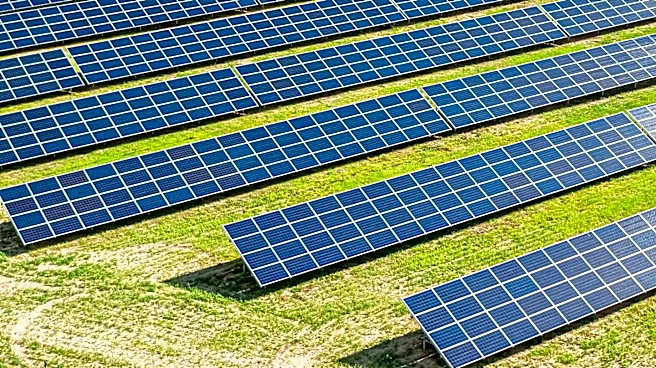
Massachusetts is advancing agrivoltaics, a dual-use solar strategy, by integrating solar panels above active agricultural operations. This initiative allows farmland to generate energy while simultaneously supporting crop growth or livestock grazing.
Notably, two cranberry bogs in Kingston and Plymouth are the first in the country, and possibly the world, to successfully grow cranberries beneath operational solar installations. This fall marks the second harvest season for cranberries under these panels. Distributed Energy Infrastructure, led by co-founder Prateek Tare, constructed these projects, which include a 4.4-megawatt array with a 13.5-megawatt-hour battery in Kingston and a 1-MW solar array in Plymouth. The state has been offering solar incentives since 2001 and became the first in 2018 to provide additional financial boosts for dual-use solar projects. Agrivoltaic projects receive an extra 9 cents per kilowatt-hour on top of the base rate of 23.17 cents for arrays between 1 MW and 5 MW, making them financially attractive for developers and farmers.
Why It's Important?
This development is crucial for Massachusetts' goal of achieving net-zero carbon emissions by 2050, addressing the challenge of siting solar projects in a densely populated state. Traditional solar installations often face opposition due to concerns about community character and environmental disruption, while using undeveloped land raises ecological concerns. Agrivoltaics offers a solution by maximizing land use, allowing for energy generation without sacrificing agricultural production. This model provides a financial lifeline for farmers, particularly cranberry growers, whose bogs are protected wetlands and cannot be developed for other uses even if they cease production. The success of these cranberry bog projects demonstrates the viability of agrivoltaics in unique agricultural settings, potentially inspiring similar initiatives nationwide and contributing to sustainable land management practices.
What's Next?
The success of the cranberry agrivoltaic projects in Kingston and Plymouth is expected to accelerate the adoption of dual-use solar in Massachusetts and beyond. Distributed Energy Infrastructure is already pursuing similar projects in apple orchards, cattle pastures, and Christmas tree farms, with preliminary work underway at another cranberry bog. Lessons learned from these initial installations are expected to streamline future projects, making them easier and more efficient to implement. Additionally, a stalled cranberry solar project in Carver, which was built but never fully operational due to company bankruptcy, has the potential to be revived by its new owner. This indicates a growing interest and commitment to completing such innovative projects, suggesting a paradigm shift in how agricultural land is utilized for renewable energy generation.
Beyond the Headlines
The integration of solar technology with cranberry farming highlights a deeper shift towards innovative land-use strategies that balance economic viability, environmental conservation, and renewable energy goals. This approach challenges traditional notions of land use, demonstrating that agriculture and energy production are not mutually exclusive but can be synergistic. The unique engineering challenges overcome in building solar arrays over cranberry bogs, such as deep foundations and overhead wiring, showcase the adaptability and problem-solving capabilities within the renewable energy sector. This model could serve as a blueprint for other regions facing similar land-use conflicts, promoting a more integrated and sustainable approach to development. It also underscores the potential for niche agricultural sectors to play a significant role in the broader energy transition.