



What's Happening?
The southern Spanish province of Granada has experienced a series of new earthquakes, with magnitudes above 4, following a magnitude 5 earthquake on Saturday. These tremors have resulted in at least three minor injuries, including a child who was hospitalized.
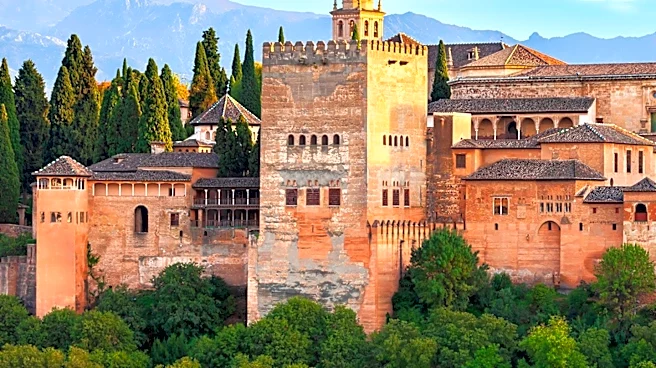
Emergency services have received over 500 calls reporting cracks, falling debris, and other earthquake-related incidents, with a dozen requests for medical assistance primarily for anxiety attacks. The seismic activity has led to the temporary closure of several administrative buildings, museums, and sports facilities. Notably, tourist access to parts of the historic Alhambra complex, a major Islamic architecture monument, was restricted, and its oldest section, the Alcazaba, was evacuated. Granada's metro system has also reduced train speeds as a precautionary measure. Residential buildings have sustained damage, including wall cracks and dislodged facades, with images showing debris on streets and damage to cars.
Why It's Important?
The recurring seismic activity in Granada poses significant concerns for public safety and the region's vital tourism industry. The closure of major cultural sites like the Alhambra, which attracted 2.7 million visitors last year, directly impacts local businesses and the Spanish economy, heavily reliant on tourism. The damage to residential buildings and infrastructure, coupled with the psychological impact on residents experiencing anxiety attacks, highlights the broader societal disruption. The need for continuous emergency response and precautionary measures, such as reduced metro speeds and building closures, underscores the immediate challenges faced by local authorities. The situation also brings into focus the vulnerability of historic structures to natural disasters and the importance of robust urban planning and emergency preparedness in seismically active zones.
What's Next?
Authorities in Granada are advising residents to remain vigilant and avoid standing near buildings if further tremors occur. The National Geographic Institute (IGN) has indicated that seismic movements and aftershocks are likely to continue in the area, urging maximum caution. The focus will be on assessing the full extent of the damage to buildings and infrastructure, particularly historical sites, to determine necessary repairs and safety protocols before reopening. Emergency services will continue to monitor the situation and respond to calls for assistance. The regional government will likely implement further measures to ensure public safety and support affected communities, while the long-term impact on tourism and local businesses will require ongoing evaluation and recovery efforts.
Beyond the Headlines
The repeated seismic events in Granada underscore the broader challenge of managing natural disasters in regions with significant historical and cultural heritage. The Alhambra, a UNESCO World Heritage site, represents not only a major tourist attraction but also an irreplaceable piece of human history. The potential for damage to such sites raises questions about preservation strategies and the integration of seismic resilience into conservation efforts. Furthermore, the psychological toll on residents, particularly the elderly and young children, highlights the often-overlooked human dimension of natural disasters beyond physical injuries and structural damage. This situation could prompt a re-evaluation of building codes, emergency response protocols, and public awareness campaigns in seismically active areas across Spain, emphasizing preparedness and community resilience.