

What's Happening?
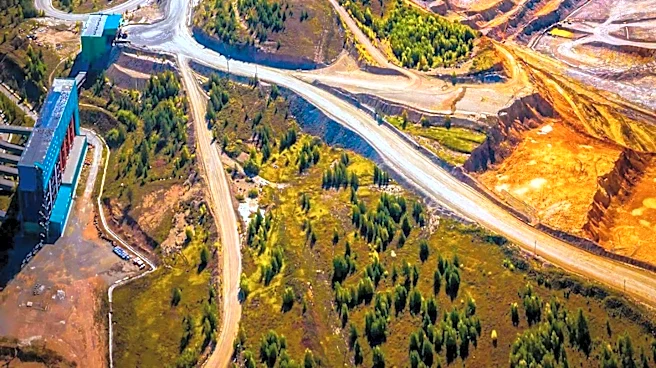
The White Mesa Mill, the sole conventional uranium mill in the United States, is facing renewed scrutiny and opposition from the Ute Mountain Ute Community in Utah. Located approximately five miles from the White Mesa Ute Community, the mill produces
yellowcake for nuclear power fuel. For decades, residents, including Malcolm Lehi and other tribal members, have expressed concerns about potential radioactive contamination affecting local water and air quality. These fears are exacerbated by the mill's plans for expansion, which include constructing new tailings cells—pits for storing toxic waste—closer to the tribal community. The current tailings cells occupy 284 acres, and the proposed new cells would be about a quarter-mile nearer to White Mesa. The Ute Mountain Ute tribe passed a resolution in 2021 calling for the mill to cease operations due to perceived severe health impacts on its residents. While psychological stress is evident, direct health effects have been challenging to definitively prove. The community's distrust is deeply rooted in the historical context of uranium mining in the region.
Why It's Important?
This situation highlights a critical intersection of national energy policy, environmental justice, and tribal sovereignty in the United States. As the drive for nuclear power gains momentum, the demand for uranium increases, placing facilities like the White Mesa Mill at the forefront of energy production. However, the expansion plans directly impact the health and environmental concerns of the Ute Mountain Ute Community, raising questions about equitable development and the protection of vulnerable populations. The community's opposition underscores the ongoing struggle for Indigenous groups to protect their ancestral lands and resources from industrial pollution. The debate also brings to light the challenges of proving direct health impacts from long-term, low-level exposure to radioactive materials, often leaving communities feeling unheard and unprotected. The outcome of this dispute could set precedents for how future energy projects are developed in proximity to tribal lands and how environmental regulations are enforced.
What's Next?
The Ute Mountain Ute Community, led by activists like Badback, is committed to fighting the proposed expansion of the White Mesa Mill. This opposition is likely to manifest through continued protests, spiritual walks, and legal challenges. The mill's operator, while stating that new cells will be triple-lined according to modern standards, will need to navigate significant community resistance and potential regulatory hurdles. The ongoing debate will likely draw attention from environmental advocacy groups, federal agencies, and potentially lawmakers, who may be pressured to intervene or review existing regulations. The community's efforts to halt the expansion could lead to prolonged legal battles and increased public awareness campaigns, potentially influencing public opinion on nuclear energy and its environmental footprint, especially concerning Indigenous communities. The situation may also prompt further scientific studies into the long-term health effects of living near uranium processing facilities.
Beyond the Headlines
The conflict at White Mesa extends beyond immediate environmental and health concerns, touching upon deeper issues of historical injustice and the legacy of uranium mining in the American Southwest. Many Indigenous communities in the region have borne the disproportionate burden of environmental contamination from past mining operations, leading to a profound distrust of industrial activities on or near their lands. This distrust is a significant factor in the current opposition, reflecting a broader struggle for self-determination and the right to a healthy environment. The psychological stress experienced by the White Mesa Ute Community, even in the absence of definitively proven physical ailments, underscores the holistic impact of environmental threats on well-being. This case serves as a microcosm of the broader national conversation about balancing energy needs with environmental protection and social equity, particularly for communities that have historically been marginalized and exploited.