








What's Happening?
U.S. policymakers are increasingly focusing on combating financial fraud and scams, which are estimated to cost Americans billions of dollars annually. The Federal Trade Commission (FTC) reported consumer losses of $3.5 billion last year due to impersonation
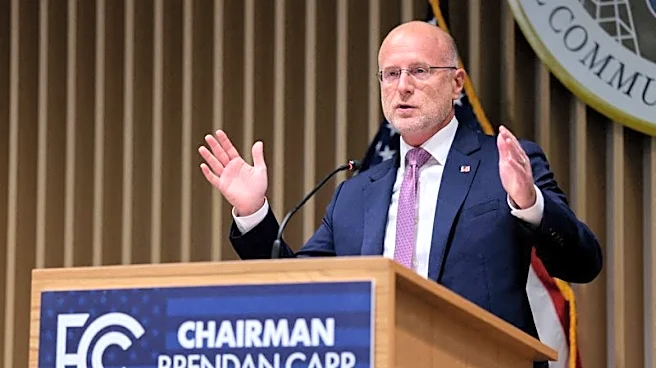
scams alone. In response, various congressional committees, including the House Financial Services Committee and the Senate Committee on Homeland Security and Governmental Affairs, have held hearings to examine the pervasive nature of fraud. The FTC announced in September its consideration of updating its government and business impersonation rule to hold social media and other tech platforms accountable for their role in facilitating these scams. Additionally, the Federal Communications Commission (FCC) has prioritized combating illegal robocalls, issuing advisories on bank impersonation scams and proposing enhanced 'Know Your Customer' and 'Know Your Upstream Provider' requirements for voice service providers. The U.S. Attorney’s Office for the District of Columbia also launched the Scam Center Strike Force in 2025 to combat international scam operations and crypto fraud.
Why It's Important?
The escalating financial fraud epidemic poses a significant threat to American consumers and the integrity of the financial system. Bank impersonation scams, in particular, exploit consumer trust in financial institutions, leading to substantial personal losses. The focus on 'upstream accountability' by policymakers signifies a shift towards holding technology and telecommunications companies responsible for the scams that proliferate on their platforms. This approach aims to disrupt the channels scammers use to reach victims, such as malicious advertising, illegal robocalls, and fake websites. If successful, these measures could protect billions of dollars from being siphoned from Americans annually, safeguarding individual savings and bolstering consumer confidence in digital interactions. The proposed legislation, like the SCAM Act and the Stop SIM Box Scams Act, indicates a bipartisan effort to create a more secure digital environment for financial transactions.
What's Next?
Looking ahead to 2027, many of the proposals currently under consideration are anticipated to become law. This legislative action is expected to close off various avenues for scammers, including illegal calls and texts, scam advertisements, and fraudulent websites. The FCC's proposed enhancements to 'Know Your Customer' and 'Know Your Upstream Provider' requirements, along with its Robocall Mitigation Scorecard, aim to strengthen the defenses against spoofed calls and illegal robocalls. Bipartisan legislation, such as the Safeguarding Consumers from Advertising Misconduct (SCAM) Act and the Stop SIM Box Scams Act, is also progressing through Congress, targeting malvertising, bank impersonation scams, and the use of SIM boxes for illegal calls. These efforts collectively aim to create a more secure environment for consumers by addressing the root causes and facilitators of financial fraud.
Beyond the Headlines
The policy shift towards upstream accountability highlights a growing recognition that the digital infrastructure, including social media and telecommunications networks, plays a critical role in the spread of financial scams. This approach raises important questions about the responsibilities of tech and telecom companies in policing content and activity on their platforms. It could lead to increased regulatory oversight and potentially significant operational changes for these companies, as they may be required to implement more robust verification processes and content moderation. The emphasis on international cooperation, as seen with the Scam Center Strike Force targeting Southeast Asian scam compounds, underscores the global nature of financial fraud and the need for coordinated efforts to combat it. This evolving landscape could redefine the balance between platform freedom and user protection in the digital age.