






What's Happening?
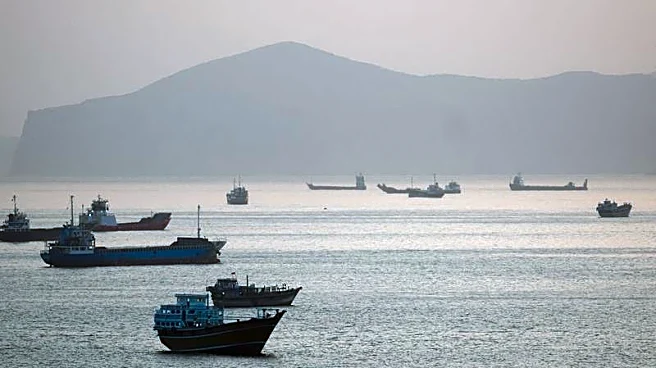
Drivers across the United States are experiencing a significant increase in gas prices, with six states now reporting average costs exceeding $5 per gallon. This rise is attributed to the ongoing conflict with Iran, which has led to the closure of the Strait
of Hormuz, a critical passage for global oil supply. The American Automobile Association (AAA) reports that California, Oregon, Washington, Alaska, Hawaii, and Nevada are the states most affected, with California seeing prices over $6 per gallon. Nationally, the average gas price has risen to $4.45 per gallon, up from $3.16 a year ago. The geopolitical tensions have disrupted energy markets, causing widespread economic strain.
Why It's Important?
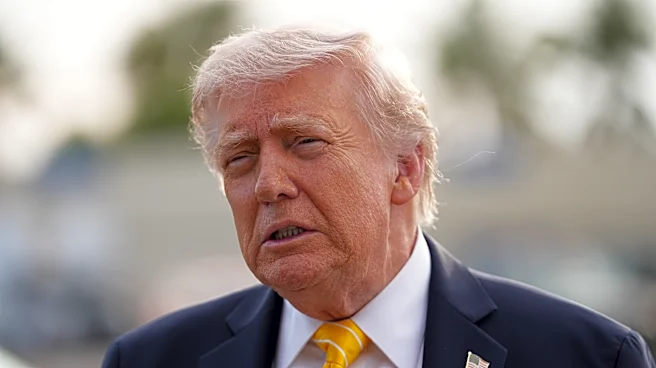
The increase in gas prices is a significant economic concern, particularly as it coincides with the upcoming midterm elections. Rising fuel costs are seen as a potential political liability for President Trump, whose administration has emphasized economic strength. The situation is exacerbated by persistent inflation, which continues to impact household expenses. A recent survey indicates that a majority of voters hold President Trump responsible for the price hikes, reflecting growing public dissatisfaction. The Energy Secretary has suggested that a return to lower gas prices may not occur until 2027, further complicating the economic landscape.
What's Next?
As gas prices continue to rise, the issue is expected to remain a central topic in both economic and political discussions. Policymakers and voters will be closely monitoring developments, particularly as the Federal Reserve considers the implications of inflation and energy costs on interest rate decisions. The ongoing conflict with Iran and its impact on global oil supply will also be a critical factor in determining future price trends.