





What's Happening?
President Trump's administration has engaged in a series of bilateral health agreements with 32 countries, including Kenya, as part of a $20.3 billion initiative. These agreements have restructured the delivery of the President’s Emergency Plan for AIDS
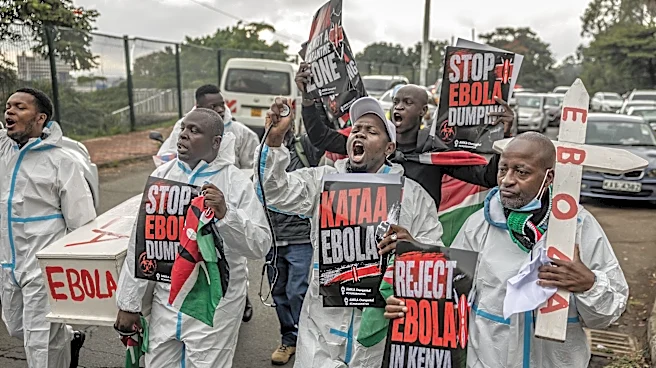
Relief (PEPFAR), originally launched by President George W. Bush. The deals often include conditions such as data-sharing access and pathogen specimen sharing. In Kenya, a controversial $2.5 billion health deal includes the construction of an Ebola quarantine facility, which has faced opposition from local doctors and legal challenges. Despite these challenges, the Kenyan government has proceeded with the agreement, citing alignment with their bilateral health deal with the U.S. The agreements have sparked concerns over data privacy and the influence of economic interests, as some countries have reportedly signed health deals following agreements on tariffs, deportations, or mineral rights.
Why It's Important?
These bilateral health agreements highlight the intersection of health diplomacy and economic interests. The restructuring of PEPFAR under these deals could impact the availability and distribution of critical health resources in participating countries. The inclusion of data-sharing requirements raises significant privacy concerns, particularly in countries with less robust data protection laws. Additionally, the timing of these agreements in relation to economic deals, such as mineral rights or deportation agreements, suggests a strategic use of health diplomacy to further U.S. economic interests. This approach may disadvantage smaller countries that lack the leverage to negotiate more favorable terms, potentially affecting their public health outcomes and economic sovereignty.
What's Next?
Countries involved in these agreements may continue to face legal and public opposition, particularly regarding data privacy and the terms of the deals. The U.S. may need to address these concerns to maintain diplomatic relations and ensure the effectiveness of its health initiatives. Additionally, the outcomes of these agreements could influence future U.S. foreign policy and health diplomacy strategies, particularly in regions with significant economic or strategic interests. Monitoring the implementation and impact of these agreements will be crucial in assessing their long-term effects on global health and international relations.
Beyond the Headlines
The ethical implications of tying health aid to economic agreements raise questions about the prioritization of public health over economic interests. The potential for these deals to set precedents in international health diplomacy could lead to shifts in how health aid is negotiated and delivered globally. The role of private sector donors in influencing these agreements also warrants scrutiny, as it may affect the transparency and accountability of U.S. foreign aid policies.