







What's Happening?
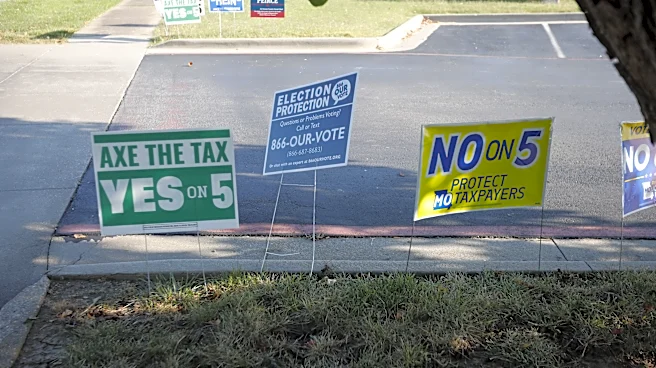
Missouri voters have blocked a Republican-led initiative to make it more difficult to pass citizen-led constitutional amendments. The proposed Amendment 4 would have required such initiatives to win a majority in each of Missouri's congressional districts,
rather than a simple statewide majority. This measure was seen as a response to recent progressive amendments passed in the state, including those on abortion rights and Medicaid expansion. The campaign against the amendment was well-funded, with opponents spending over $6 million on ads. The rejection of this measure maintains the current process, which allows voters to legislate directly through ballot initiatives.
Why It's Important?
The rejection of Amendment 4 is a significant victory for proponents of direct democracy in Missouri, preserving the ability of citizens to influence state policy through ballot initiatives. This decision could have broader implications for other states considering similar measures to restrict citizen-led amendments. The outcome reflects a pushback against efforts to limit voter influence and could embolden similar movements in other states. It also highlights the ongoing political struggle between progressive and conservative forces in Missouri, a state with a Republican-controlled legislature but a history of passing progressive ballot measures.
What's Next?
With the defeat of Amendment 4, Missouri's current process for citizen-led amendments remains intact. However, the political battle over direct democracy is likely to continue, with potential future efforts to alter the process. Other states may look to Missouri's experience as they consider their own rules for ballot initiatives. Additionally, the outcome may influence upcoming elections, as political groups assess the power of grassroots movements and voter engagement in shaping state policy. The decision could also lead to increased scrutiny of how congressional districts are drawn, given their role in the proposed amendment.