






What's Happening?
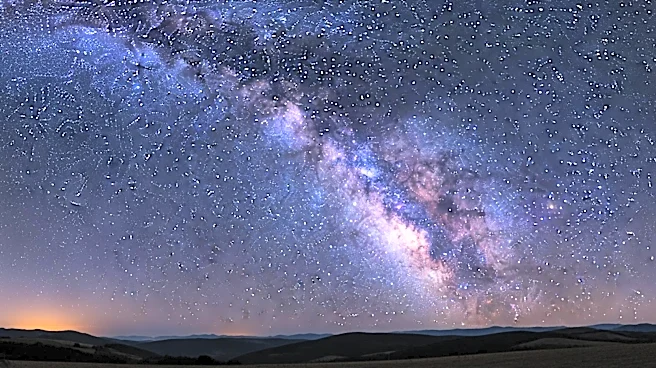
In mid-May, skywatchers will have the opportunity to observe the Milky Way's core, thanks to the new moon on May 16, which will provide ideal dark skies. This period, known as 'Core Season,' spans from February to October, offering the best conditions
to view the galaxy's dense central region. The absence of moonlight will allow for optimal visibility of the Milky Way's core, which is best seen in the southern sky. This celestial event is a reminder of the universe's vastness and the intricate cosmic cycles occurring within our galaxy.
Why It's Important?
Viewing the Milky Way's core offers a rare glimpse into the heart of our galaxy, where stars are born and die in a cosmic cycle. This event is significant for both professional astronomers and casual skywatchers, as it provides a chance to study and appreciate the structure and dynamics of the Milky Way. The visibility of the core during this time can enhance public interest in astronomy and encourage educational activities related to space science. It also underscores the importance of preserving dark sky areas, which are essential for astronomical observations.
What's Next?
As the Earth continues its orbit, the visibility of the Milky Way's core will become more restricted, especially as summer approaches and twilight intensifies. The next new moon in June will coincide with the summer solstice, further limiting the window for stargazing. This makes the current period a crucial time for astronomers and enthusiasts to observe and document the Milky Way's core. Future opportunities will depend on the timing of new moons and the reduction of light pollution in observation areas.