




What's Happening?
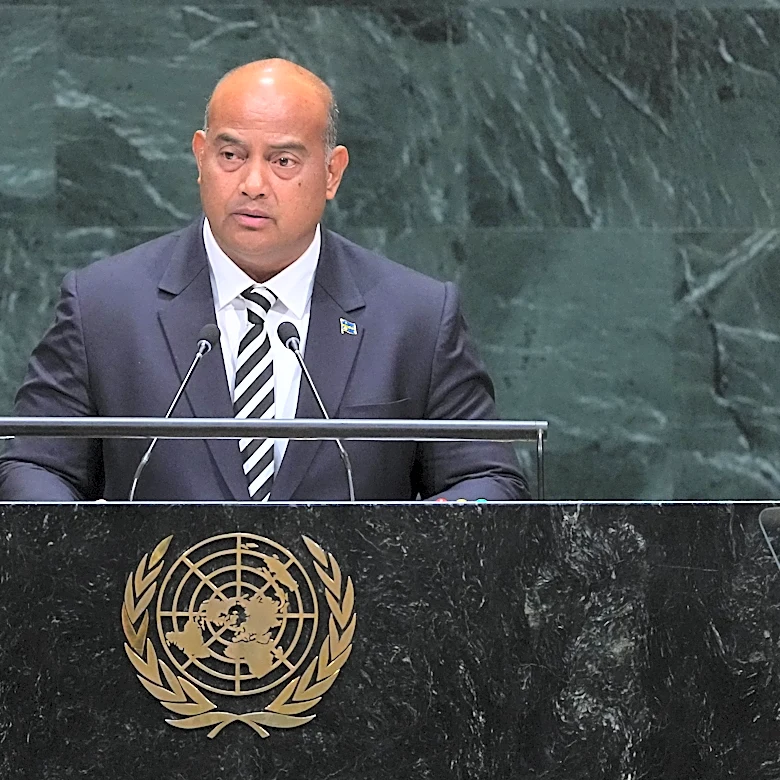
President Volodymyr Zelensky of Ukraine has reported that Starshield, the military-grade version of Elon Musk’s Starlink satellite network, has imposed a systemic speed restriction of 161 kilometers per hour (100 miles per hour) across Ukraine. This limitation
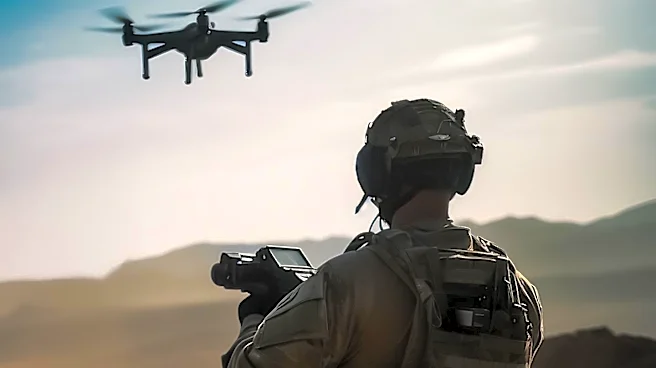
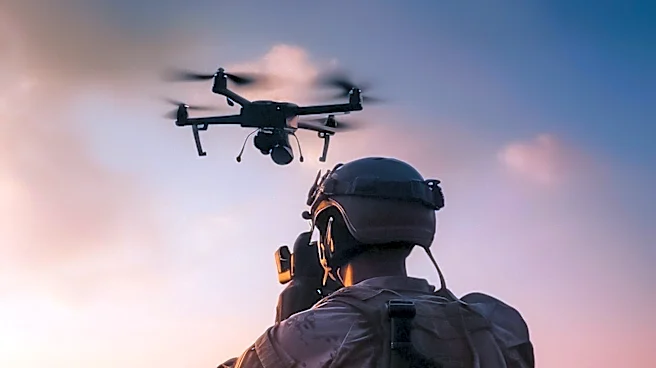
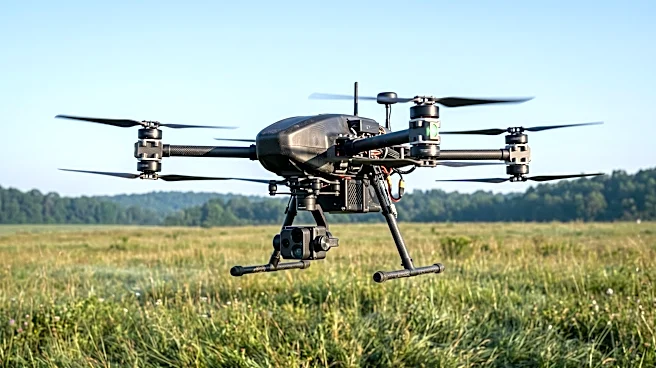
is significantly hampering the Ukrainian military's ability to intercept faster Russian jet-powered drones. According to reports from Defense Minister Yevhen Khmara and Commander-in-Chief of the Armed Forces of Ukraine (AFU) Mykhailo Drapatyi, these are not random technical glitches but deliberate, systemic restrictions. Zelensky stated that the speed cap creates substantial obstacles for Ukrainian interception units, as their drones cannot achieve sufficient speed to engage the faster Russian models, leading to successful Russian strikes. This issue became particularly evident after a large-scale Russian aerial assault involving ballistic missiles and 123 strike drones, including 73 jet-powered Shahed-type drones. While Ukrainian air defenses intercepted many UAVs, no incoming missiles were intercepted, and the speed cap is believed to have contributed to this challenge.
Why It's Important?
The reported Starshield speed cap has critical implications for Ukraine's defense capabilities and its ability to protect its civilian population and infrastructure from Russian aerial attacks. The inability to effectively intercept jet-powered drones due to speed limitations directly compromises Ukraine's air defense strategy, which heavily relies on drone interceptors given the restrictions on using manned aircraft near the front line. This situation could lead to an increase in successful Russian strikes, causing more casualties and damage. Furthermore, President Zelensky warned that decisions made in the United States regarding Starshield restrictions in Russian-occupied parts of Ukraine risk implicitly treating Ukrainian territory as if it no longer belongs to Ukraine. This raises concerns about the geopolitical implications of such technical limitations and their potential to undermine Ukraine's sovereignty and territorial integrity in the eyes of international partners. The reliance on external technology providers for critical defense infrastructure highlights a vulnerability that could be exploited or inadvertently impact national security.
What's Next?
Ukraine is actively seeking clarification from the U.S. regarding the circumstances behind these Starshield restrictions. President Zelensky emphasized the urgency of this issue, stating that Ukraine has received little information so far. The outcome of these discussions will be crucial for Ukraine's defense planning and its ability to counter future Russian drone attacks. If the speed cap remains in place, Ukraine may need to explore alternative interception technologies or strategies to mitigate the impact of faster Russian drones. This situation could also prompt a broader reevaluation of the reliance on commercial satellite communication systems for military applications and the need for more robust, sovereign defense communication infrastructure. The diplomatic efforts to resolve this issue will be closely watched, as they could set precedents for how technology providers interact with national defense efforts in future conflicts.
Beyond the Headlines
The Starshield speed cap incident brings to light the complex interplay between commercial technology, national security, and international relations. It underscores the ethical and strategic dilemmas that arise when critical defense infrastructure is controlled by private entities, even if allied. The potential for a technology provider's policies to inadvertently influence the outcome of a conflict or impact a nation's sovereignty is a significant concern. This situation could trigger deeper discussions within the U.S. and among its allies about the governance and oversight of dual-use technologies, particularly those with military applications. It also highlights the ongoing challenge of maintaining technological superiority and adaptability in modern warfare, where adversaries are constantly innovating tactics and equipment. The incident may also prompt a re-evaluation of the terms of service and operational control for military-grade satellite communication systems to ensure they align with the strategic interests of user nations.