
What's Happening?
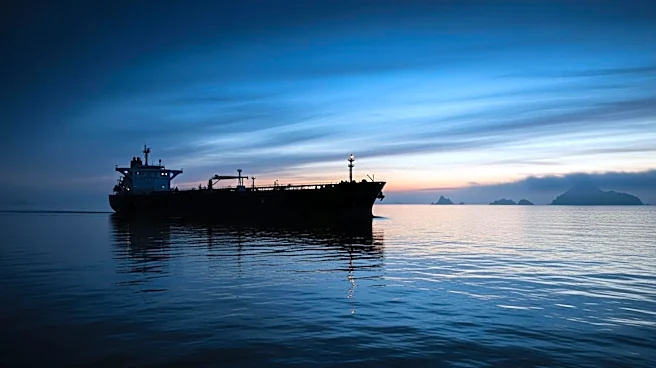
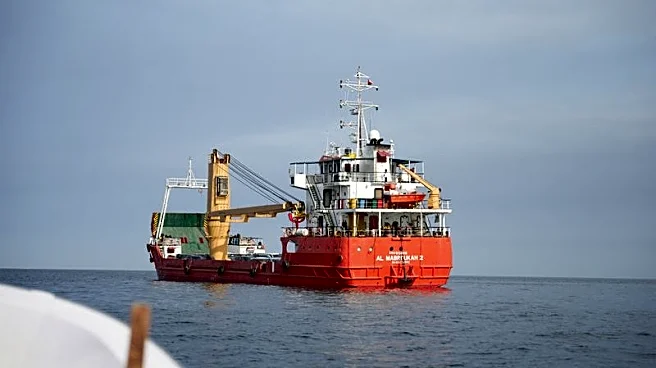
The United States has fully implemented a blockade on Iranian ports, effectively cutting off Tehran's international sea trade, which constitutes about 90% of its economy. This action follows President
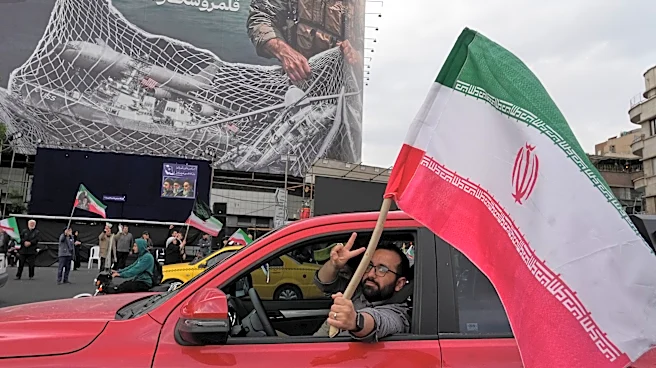
Trump's order and involves over 10,000 U.S. troops, numerous Navy ships, and fighter jets stationed in the Gulf of Oman and the Arabian Sea. The blockade aims to prevent the transit of Iranian oil, significantly affecting Iran's economy, which is estimated to lose approximately $435 million daily. The U.S. Central Command confirmed that no ships passed through the blockade in the first 24 hours, although some vessels, including a U.S.-sanctioned Chinese-owned tanker, managed to exit the Gulf. The blockade comes amid a fragile ceasefire and ongoing diplomatic discussions with Tehran.
Why It's Important?
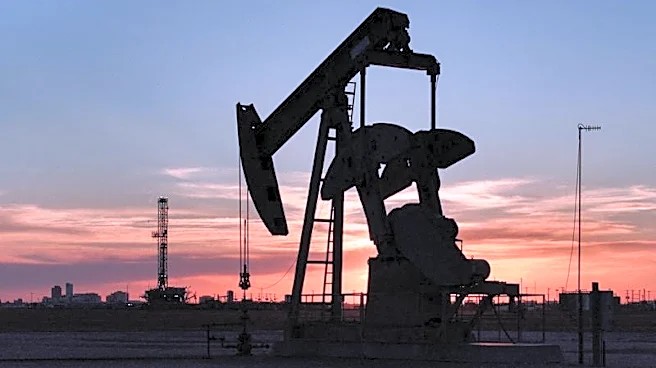
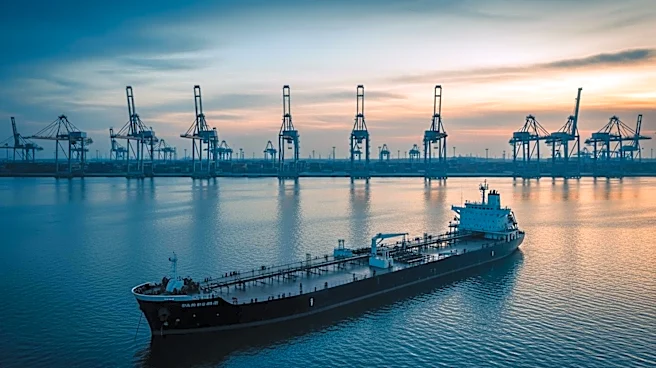
The blockade has significant implications for global oil markets and international relations. Iran's economy, heavily reliant on seaborne trade through the Strait of Hormuz, faces severe economic damage. The blockade could disrupt global energy supplies, as the Strait is a critical passage for about a fifth of the world's oil. This action may strain U.S. relations with countries like China and India, major buyers of Iranian oil. The International Monetary Fund has already adjusted its global growth forecast, citing potential adverse scenarios with oil prices remaining high. The blockade's impact on oil prices and international trade could have far-reaching economic consequences.
What's Next?
The U.S. has signaled a potential diplomatic resolution to the conflict, which could alleviate some pressure on oil markets. However, the blockade's continuation may lead to increased tensions in the region and further economic strain on Iran. The international community, particularly countries dependent on Iranian oil, may seek alternative solutions or engage in diplomatic efforts to resolve the situation. The U.S. and its allies will likely continue monitoring the blockade's effectiveness and its geopolitical ramifications.
Beyond the Headlines
The blockade raises ethical and legal questions about the use of military force in economic conflicts. It highlights the complexities of international trade and the potential for military actions to influence global markets. The situation underscores the delicate balance between enforcing sanctions and maintaining diplomatic relations. Long-term, this development could lead to shifts in global energy policies and alliances, as countries reassess their energy dependencies and geopolitical strategies.