




What's Happening?
Brazil and the United States are deepening their partnership to combat transnational organized crime by enhancing intelligence sharing, risk analysis, and operational coordination. This collaboration aims to anticipate threats and strengthen cross-border
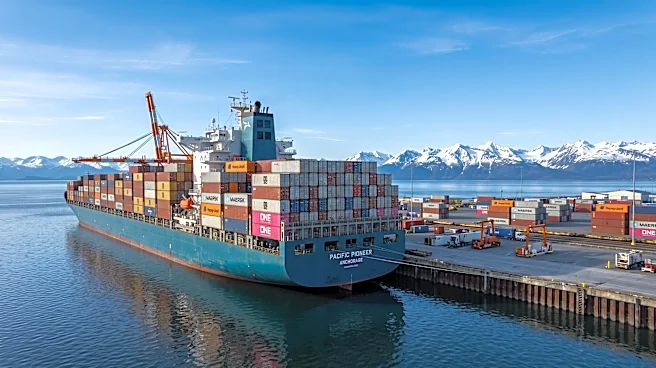
response capabilities against illicit activities. A key initiative in this effort is the Mutual Interdiction Team (MIT), launched in April, which involves Brazil’s Federal Revenue Service (RFB) and U.S. Customs and Border Protection (CBP). The MIT focuses on integrating intelligence and coordinating actions to identify and intercept illegal shipments of weapons and drugs. This includes sharing information on cargo, routes, and operators to detect suspicious patterns and connect seemingly unrelated shipments, thereby focusing inspections on higher-risk cargo. The objective extends beyond mere interdiction to identifying the organizations that finance and move these illicit goods along international routes. An example of this cooperation was Operation Timber Shield, which involved shared intelligence among several countries, including the U.S., leading to increased inspections of timber shipments suspected of containing narcotics.
Why It's Important?
This enhanced cooperation between Brazil and the U.S. is crucial for disrupting transnational organized crime networks that exploit global logistics, financial, and commercial chains. By sharing data and technology, both countries can overcome the logistical advantages often held by criminal organizations, making controls more proactive and effective. The initiative helps prevent illicit shipments of weapons and drugs from reaching their destinations, thereby reducing the availability of these harmful substances and tools within communities. Furthermore, by identifying and targeting the organizations behind these illicit activities, the collaboration aims to dismantle criminal enterprises at their source, rather than just intercepting individual shipments. This strategic approach has significant implications for public safety and national security in both countries, as it directly addresses the flow of contraband that fuels violence and instability. The development of permanent mechanisms for identifying patterns and risks across international supply chains represents a significant step forward in global efforts to combat organized crime.
What's Next?
The collaboration is expected to continue developing and refining operational alert mechanisms to prevent false positives and unnecessary logistical delays for legitimate trade, as highlighted by the forensic analyses in Operation Timber Shield. The Desarma digital platform, used by Brazil's Federal Revenue Service for international tracing of weapons and other sensitive materials, will play a crucial role in structured, real-time information sharing. This will enable authorities to identify patterns, connections between senders and recipients, and recurring routes more effectively. The concept of 'remote targeting,' which involves analyzing cargo information and images before shipments arrive, will also be expanded to improve targeting and coordination. Future efforts will likely focus on continuous training for professionals in financial intelligence and forensic chemistry to interpret complex logistics networks and sophisticated chemical alterations. The goal is to develop interoperable systems that allow for rapid information sharing, rigorous verification, and coordinated action against criminal networks operating across multiple jurisdictions.
Beyond the Headlines
The deeper implications of this collaboration extend to the evolving role of customs agencies, which are transforming from mere inspectors of goods into critical nodes within broader risk-analysis networks. This shift signifies a move towards a more integrated and intelligence-driven approach to border security, where each suspicious shipment contributes to a shared body of information that helps map and anticipate criminal activities. The emphasis on scientific forensic procedures and rigorous verification underscores the importance of accuracy and reliability in intelligence sharing, preventing disruptions to legitimate trade while effectively combating illicit flows. This model of international cooperation, leveraging data, technology, and specialized expertise, could serve as a blueprint for other regions grappling with transnational crime. It highlights the necessity of a holistic approach that combines law enforcement, intelligence, and technological innovation to address complex global security challenges, ultimately fostering greater stability and security across borders.