






What's Happening?
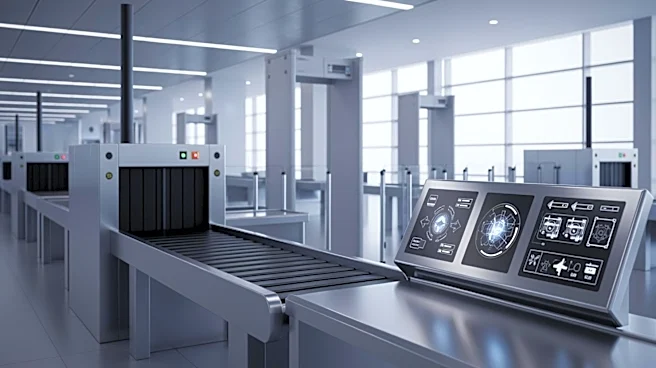
The Transportation Security Administration (TSA) is exploring new initiatives to privatize airport security operations, following President Trump's advocacy for privatization. Two key experiments are underway: TSA Gold+, which aims to shift security operations to private
contractors, and an off-site screening trial in Boston. The latter allows passengers to clear security 25 miles away from the airport and then travel by bus to their gates. These initiatives are part of a broader effort to enhance efficiency and safety while reducing costs. The TSA has been experimenting with privatization through its Screening Partnership Program, which uses contracted security officials at several airports.
Why It's Important?
The move towards privatization of airport security could significantly impact the aviation industry and TSA employees. Proponents argue that privatization could lead to cost savings, improved efficiency, and enhanced safety. However, critics warn of potential job losses, lower pay, and weakened worker protections for TSA employees. The initiative reflects broader trends in government policy towards privatization and could set a precedent for other public services. The success or failure of these experiments could influence future decisions on the privatization of airport security and other government functions.
What's Next?
The TSA will continue to evaluate the outcomes of these experiments to determine their viability for broader implementation. If successful, the initiatives could lead to a nationwide shift towards privatized airport security. Stakeholders, including government officials, private companies, and labor unions, will likely engage in discussions about the implications of these changes. The results of these experiments could also influence public opinion and policy decisions regarding the role of private companies in public services.