







What's Happening?
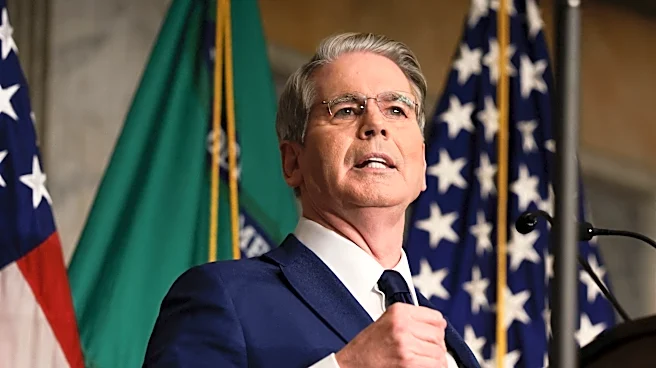
U.S. Rep. Suhas Subramanyam, D-Va., has introduced a comprehensive 'National Data Center Plan' comprising four bills aimed at regulating the development and impact of data centers. This initiative comes as his 10th Congressional District, encompassing
Loudoun and Prince William counties, hosts over 300 data centers, with an additional 200 planned. Subramanyam highlighted that this concentration, particularly in Loudoun County which handles approximately 70% of the nation's internet traffic, makes the region a significant target for adversaries. He cited examples of Russia's attacks on Ukrainian data centers and Iran's strikes in the Middle East as precedents. The proposed legislation includes the Responsible Data Center Siting Act, the Data Center Fair Share Act, the Data Infrastructure Energy Measurement and Standards Act, and the Data Infrastructure Risk Reduction Act. These bills seek to guide data center placement, ensure fair contributions to grid upgrades, establish energy and water usage standards, and protect communities from potential risks, including national security threats.
Why It's Important?
The proposed National Data Center Plan is important because it addresses critical issues arising from the rapid proliferation of data centers, particularly their impact on national security, utility infrastructure, and local communities. The concentration of data centers, especially in areas like Virginia's 10th District, presents a potential national security vulnerability, as these facilities could become targets for cyber or physical attacks, disrupting a significant portion of U.S. internet traffic. Furthermore, the energy demands of these centers contribute to rising utility bills and strain existing power grids, necessitating costly upgrades. The plan's focus on establishing energy and water usage standards is crucial for environmental sustainability, as data centers are significant consumers of both resources. By mandating responsible siting and requiring data centers to contribute to infrastructure costs, the legislation aims to mitigate negative impacts on residents, who currently face concerns about noise, environmental effects, and property values due to the current 'short-term profit' driven approach to development.
What's Next?
The four bills comprising the National Data Center Plan have been introduced but have not yet been scheduled for a committee vote. For any of these bills to become law, they would require approval from both the House and Senate, followed by a presidential signature. The Data Infrastructure Risk Reduction Act, in particular, would direct the Department of Homeland Security (DHS), through the Cybersecurity and Infrastructure Security Agency (CISA), to classify critical data centers and develop a defense strategy within 180 days. This bill also proposes DHS funding to bury vulnerable above-ground power lines serving data centers, using existing critical infrastructure protection funds. The Department of Homeland Security has been contacted for comment on the bill. The legislative process will involve committee hearings, potential amendments, and votes, with significant debate expected given the economic and security implications for the technology sector and affected communities.
Beyond the Headlines
Beyond the immediate legislative actions, this plan highlights a growing national reckoning with the unbridled expansion of digital infrastructure. The emphasis on data centers as potential national security targets underscores a shift in how critical infrastructure is defined in the digital age, moving beyond traditional physical assets to include the digital backbone of the nation. The debate over burying power lines, while seemingly a local issue, reflects a broader tension between economic development, environmental concerns, and community well-being. This legislative push could set a precedent for how other states and the federal government approach the regulation of energy-intensive industries, potentially leading to more stringent national standards for resource consumption and infrastructure resilience. It also brings to the forefront the ethical considerations of balancing technological advancement with the protection of local environments and the security of national digital assets.